Ham & Cheese Lasagna with Creamy Mornay Sauce
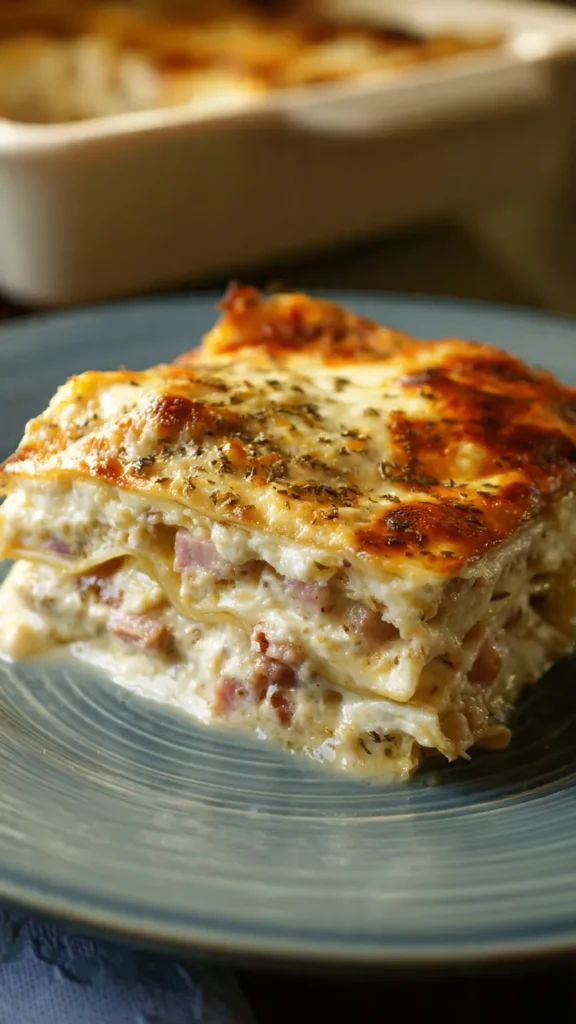
When comfort food calls for something beyond the ordinary, this ham and cheese lasagna delivers layers of indulgence that transform simple ingredients into an unforgettable meal. Unlike traditional Italian lasagna with its tomato-based ragù, this French-inspired variation showcases the elegance of Mornay sauce—a classic béchamel enriched with cheese—paired with savory ham and two exceptional melting cheeses. The result is a dish that’s simultaneously refined and deeply satisfying, perfect for weekend gatherings or special family dinners.
The magic of this recipe lies in its thoughtful construction. Each layer builds upon the last, creating a harmonious blend of textures and flavors. Fresh lasagna sheets provide a delicate, silky foundation that absorbs the creamy sauce beautifully. Slices of quality cooked ham add a gentle saltiness and protein-rich substance, while Emmental and raclette cheeses contribute their distinct characteristics—Emmental offering nutty sweetness and raclette providing exceptional meltability and depth.
At the heart of this dish is the Mornay sauce, a French mother sauce that elevates the entire composition. This velvety preparation combines butter, flour, milk, and cheese into a smooth, luxurious coating that binds all elements together. The addition of onion, egg yolk, and warm spices creates complexity without overwhelming the primary flavors. When baked, the sauce transforms into a golden, bubbling blanket that promises richness in every forkful.
Ingredients
Pasta & Ham
- 6 large sheets fresh lasagna pasta
- 6 slices cooked ham
Mornay Sauce
- 50 grams onion, peeled and quartered
- 50 grams unsalted butter
- 55 grams plain flour
- 600 grams semi-skimmed milk
- 1 egg yolk
- 0.5 teaspoon fine salt
- 3 pinches ground black pepper
- 3 pinches ground nutmeg
Cheese
- 140 grams grated Emmental cheese
- 220 grams sliced raclette cheese or comparable melting cheese
Preparation
Making the Mornay Sauce
The foundation of exceptional lasagna begins with a properly executed Mornay sauce. This classic French sauce requires attention to detail but rewards you with unparalleled creaminess and flavor.
Start by preparing your onion. Peel and quarter it, then place the pieces in a blender. Pulse for approximately 2 seconds at speed 5 to finely chop the onion without turning it into liquid. Use a spatula to scrape down the sides of the blender, ensuring all onion pieces are evenly processed. This step infuses the sauce with subtle aromatic depth without leaving chunks that would disrupt the smooth texture.
Add the butter, flour, milk, egg yolk, salt, pepper, and nutmeg to the blender with the onion. These ingredients will combine to create the sauce base. Set your blender to cook mode at 90°C on speed 4 and process for 8 minutes. During this time, the butter will melt, the flour will cook and lose its raw taste, and the mixture will thicken into a smooth, creamy sauce. The gentle heat ensures the egg yolk enriches the sauce without scrambling, while the constant movement prevents lumps from forming.
Once the initial cooking is complete, add 100 grams of grated Emmental cheese to the blender. Cook for an additional minute at the same temperature and speed setting. This final step melts the cheese completely and integrates it seamlessly into the sauce, creating the signature Mornay consistency. The sauce should coat the back of a spoon and have a glossy, fluid appearance.
Assembling the Lasagna
Proper assembly ensures even distribution of flavors and prevents common lasagna pitfalls like sticking or uneven cooking. Begin by generously buttering a large gratin dish. This crucial step creates a barrier between the dish and the first layer of pasta, preventing sticking and making serving much easier.
Spread a thin layer of Mornay sauce across the bottom of the buttered dish. This acts as a cushion for the pasta and ensures the bottom layer doesn’t dry out during baking. The sauce should cover the entire surface but needn’t be thick—just enough to create a light coating.
Place your first layer of lasagna sheets in the dish, trimming them as necessary to fit snugly without overlapping. Fresh pasta works best for this recipe as it absorbs the sauce beautifully and creates a tender texture, but if using dried pasta, ensure it’s briefly pre-cooked according to package directions.
Spread one quarter of the remaining Mornay sauce over the pasta layer, using a spatula to distribute it evenly. Top with 2 slices of ham, arranging them to cover as much surface area as possible. Finally, add one third of the sliced raclette cheese, distributing the slices evenly across the layer. This creates your first complete tier.
Continue building your lasagna with precision. Add a second layer of pasta sheets, followed by one third of the remaining Mornay sauce, 2 more slices of ham, and another portion of raclette cheese. The key is maintaining consistent proportions so each serving contains balanced amounts of pasta, ham, cheese, and sauce.
Repeat this process for the third layer: pasta sheets, half of the remaining sauce, 2 slices of ham, and the last of the raclette cheese. This middle section forms the heart of your lasagna, where all the flavors meld together during baking.
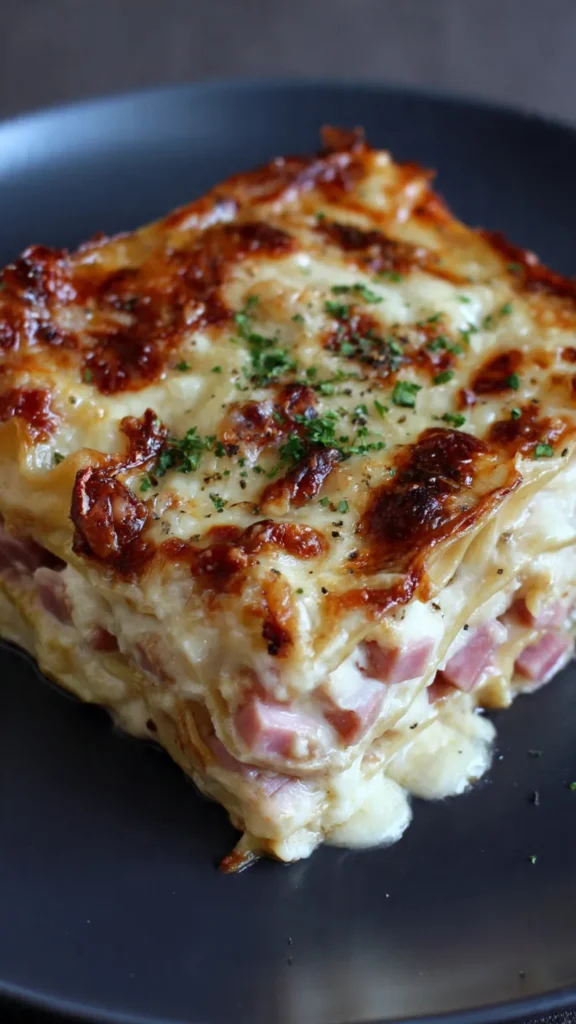
For the final layer, place the last sheets of lasagna pasta on top. Spread all remaining Mornay sauce over this layer, ensuring complete coverage to prevent the pasta from drying out. Sprinkle the surface with 40 grams of grated Emmental cheese. This top layer will transform into a beautiful golden crust during baking, providing textural contrast to the creamy interior.
Baking to Perfection
Preheat your oven to 200°C, ensuring it reaches full temperature before placing the lasagna inside. This high heat is essential for creating the signature golden-brown crust while heating the layers through completely.
Bake the lasagna for 20 minutes, monitoring the surface as it transforms. You’re looking for a golden-brown color across the top with visible bubbling around the edges where the sauce meets the dish. These bubbles indicate the interior is thoroughly heated and the cheeses have melted completely.
When the lasagna emerges from the oven, resist the temptation to serve immediately. Allow it to rest for 5-10 minutes at room temperature. This resting period lets the layers settle and the sauce thicken slightly as it cools, making clean slicing much easier and preventing the filling from running out when plated.
Serving Suggestions
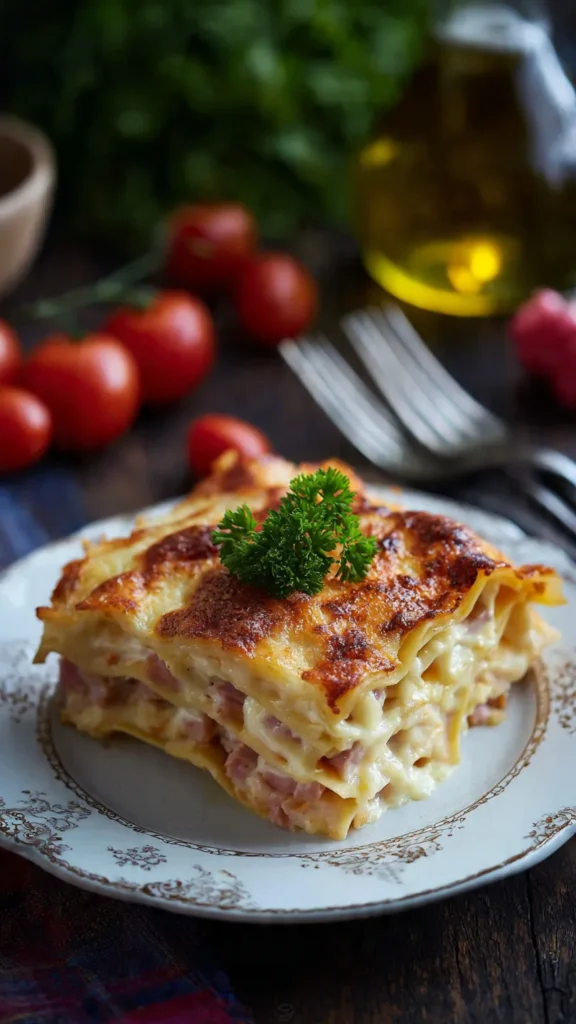
This ham and cheese lasagna shines as a main course accompanied by simple, fresh sides that complement rather than compete with its richness. A crisp green salad dressed with vinaigrette provides refreshing contrast, while roasted vegetables add color and nutrition to the plate. Crusty bread serves well for soaking up any extra sauce.
For beverages, consider a medium-bodied white wine that can stand up to the creamy sauce, or a light red that won’t overwhelm the delicate ham. Sparkling water with lemon offers a palate-cleansing alternative.
Storage and Reheating
Leftover lasagna stores beautifully, often tasting even better the next day as flavors continue developing. Cover tightly with foil or transfer to an airtight container and refrigerate for up to 3 days. Reheat individual portions in the microwave or warm the entire dish covered in a 160°C oven until heated through.
This lasagna also freezes exceptionally well. Prepare it completely but don’t bake, then wrap tightly in multiple layers of plastic wrap and foil. Freeze for up to 3 months. Thaw overnight in the refrigerator before baking as directed, adding an extra 5-10 minutes to the cooking time if needed.
Equipment Notes
A blender or food processor streamlines Mornay sauce preparation, though you can make it traditionally in a saucepan with a whisk if preferred. A large gratin or baking dish measuring approximately 9×13 inches provides ideal proportions for six layers. Use a reliable oven with accurate temperature control, and keep a spatula handy for spreading sauce and scraping bowls.
Allergen and Dietary Information
This recipe contains multiple common allergens that require consideration for those with dietary restrictions. Dairy appears prominently through milk, butter, and cheese throughout the dish. Eggs contribute to the Mornay sauce richness. Wheat gluten exists in both the pasta and flour used for the sauce. The ham contains pork, which may conflict with certain dietary or religious restrictions.
For those monitoring nutrition, each serving provides approximately 525 calories with 29 grams of fat, 40 grams of carbohydrates, and 29 grams of protein. These values represent estimates based on standard ingredient measurements and may vary based on specific brands and portion sizes.