Decadent Biscoff Pancake Stack for Breakfast
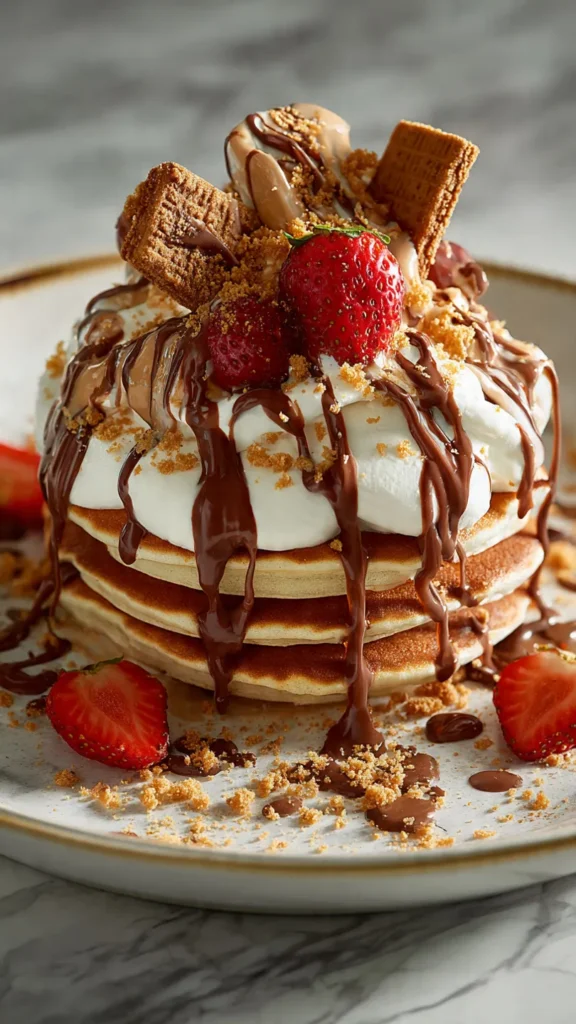
There’s something undeniably magical about waking up to the smell of pancakes sizzling on the stove. Pancakes have long been a beloved breakfast staple across homes worldwide, bringing families together around the table for a comforting morning meal. But what happens when you take this classic favorite and elevate it to new heights of indulgence? You get the Decadent Biscoff Pancake Stack – a recipe that transforms ordinary breakfast into an extraordinary experience.
These aren’t just any pancakes. They’re fluffy, golden rounds infused with the distinctive caramelized flavor of Biscoff spread, creating a warm, spiced sweetness in every bite. The real showstopper, however, is the luxurious Biscoff whipped cream that crowns each layer, turning a simple stack into a dessert-worthy creation that still counts as breakfast. Whether you’re planning a special weekend brunch, celebrating a holiday morning, or simply treating yourself because you deserve it, this recipe delivers on all fronts.
The beauty of this Biscoff pancake stack lies not only in its impressive presentation and incredible taste but also in its surprising simplicity. You don’t need to be a professional chef or spend hours in the kitchen to achieve bakery-quality results. With basic pantry ingredients, a couple of mixing bowls, and about thirty minutes from start to finish, you’ll have a stack that looks like it came straight from a gourmet brunch café. The recipe is forgiving enough for beginners yet sophisticated enough to impress even the most discerning breakfast enthusiasts.
Picture this: a towering stack of perfectly golden pancakes, each layer separated by clouds of cream infused with that signature Biscoff flavor. Add a drizzle of extra spread cascading down the sides, perhaps some fresh banana slices for contrast, and a crumbled Lotus biscuit for textural interest. The combination of warm, fluffy pancakes with cool, creamy topping creates a textural symphony that makes every forkful a moment of pure bliss. This is comfort food at its finest – familiar yet elevated, simple yet spectacular.
What makes Biscoff such a perfect addition to pancakes is its unique flavor profile. Those warm notes of cinnamon, nutmeg, and caramelized sugar complement the vanilla-scented batter beautifully, creating depth without overwhelming the palate. The spread melts into the batter during cooking, creating pockets of concentrated flavor throughout each pancake. Meanwhile, the whipped cream topping adds a luxurious touch that balances the sweetness with its light, airy texture.
This recipe has become a go-to for special occasions in many households, and once you try it, you’ll understand why. It’s perfect for birthday breakfasts, anniversary mornings, holiday celebrations, or those lazy Sunday mornings when you want to make the day feel special. Kids absolutely adore these pancakes, making them an excellent choice for creating lasting breakfast memories with your family.
Table of Contents
Ingredients
For the pancakes:
- 2 cups self-raising flour (240 g)
- 1 tsp baking powder (4 g)
- 2 tbsp light brown sugar (24 g)
- 1 1/4 cups milk (300 ml)
- 2 tbsp Biscoff spread, melted (30 ml)
- 2 large eggs
- 1 tbsp vegetable oil (15 ml)
- 1 tsp vanilla bean paste (5 ml)
For the Biscoff whipped cream:
- 1 cup double/heavy cream (250 ml)
- 2 tbsp Biscoff spread, melted (30 ml)
Optional toppings:
- Extra Biscoff spread for drizzling
- Fresh banana slices
- Crumbled Lotus biscuits
- Fresh berries
Instructions
Preparing the Dry Ingredients
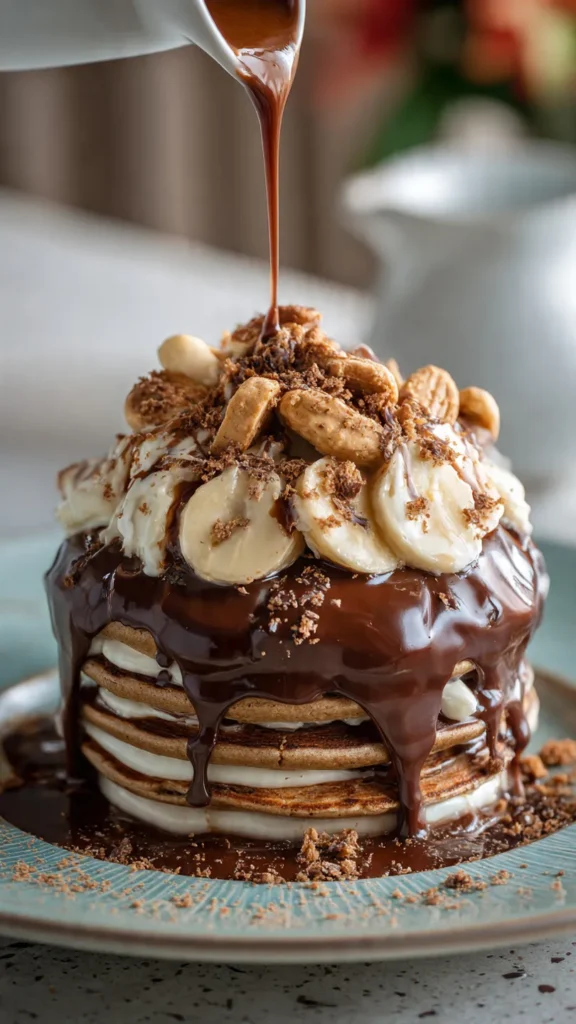
Start by gathering a large mixing bowl and adding your self-raising flour, baking powder, and light brown sugar. Using a whisk, blend these dry ingredients together thoroughly. This initial whisking is more important than you might think – it ensures the baking powder is evenly distributed throughout the flour, which is crucial for achieving those perfectly fluffy pancakes with an even rise. The light brown sugar adds a subtle molasses note that pairs beautifully with the Biscoff flavor you’ll be adding later. Take your time with this step to break up any lumps in the flour.
Creating the Wet Mixture
In a separate bowl or the bowl of your stand mixer, combine the milk, melted Biscoff spread, eggs, vegetable oil, and vanilla bean paste. The Biscoff spread should be melted but not hot – you don’t want it to cook the eggs. A quick zap in the microwave for about 15-20 seconds should do the trick. Whisk all these wet ingredients together vigorously until the mixture is completely smooth and the Biscoff is fully incorporated. You’ll notice the mixture takes on a beautiful caramel color from the Biscoff spread. The vanilla bean paste adds those lovely flecks of vanilla throughout your pancakes and provides a more intense vanilla flavor than extract alone.
Combining for the Perfect Batter
Now comes the crucial step of combining wet and dry ingredients. If using a stand mixer, set it to low speed. Begin adding the dry ingredients to your wet mixture gradually – about one tablespoon at a time works well. This slow incorporation prevents lumps from forming and ensures a silky-smooth batter. Mix just until combined, being careful not to overmix, as this can lead to tough pancakes. Use a rubber spatula to scrape down the sides and bottom of the bowl, making sure no dry pockets of flour remain hidden. The finished batter should be thick and luxurious, coating the back of a spoon nicely. At this point, let your batter rest for about 5 minutes – this resting period allows the flour to fully hydrate and helps create even fluffier pancakes.
Cooking Your Pancakes to Perfection
Heat your non-stick frying pan or well-seasoned cast iron skillet over medium heat. Temperature control is key here – too hot and you’ll burn the outside while leaving the inside undercooked; too cool and your pancakes will be pale and dense. Add about a teaspoon of vegetable oil to your preheated pan, swirling to coat the surface evenly. You can also use butter if you prefer, but oil prevents burning better at higher temperatures.
Using a ladle or measuring cup, pour the batter onto the pan. A quarter-cup measure works well for medium-sized pancakes, though you can adjust based on your preference. Watch for those telltale signs of readiness: bubbles forming on the surface and popping, leaving little holes, and the edges beginning to look dry and set. This usually takes about 1 to 2 minutes. When these signs appear, it’s time to flip. Use a thin, wide spatula and flip with confidence in one smooth motion. Cook the second side for another 1 to 2 minutes until golden brown.
Transfer cooked pancakes to a plate and keep them warm – you can place them in a low oven (around 200°F) while you finish the batch. Repeat the process with the remaining batter, adding a bit more oil to the pan between batches as needed.
Making the Biscoff Whipped Cream
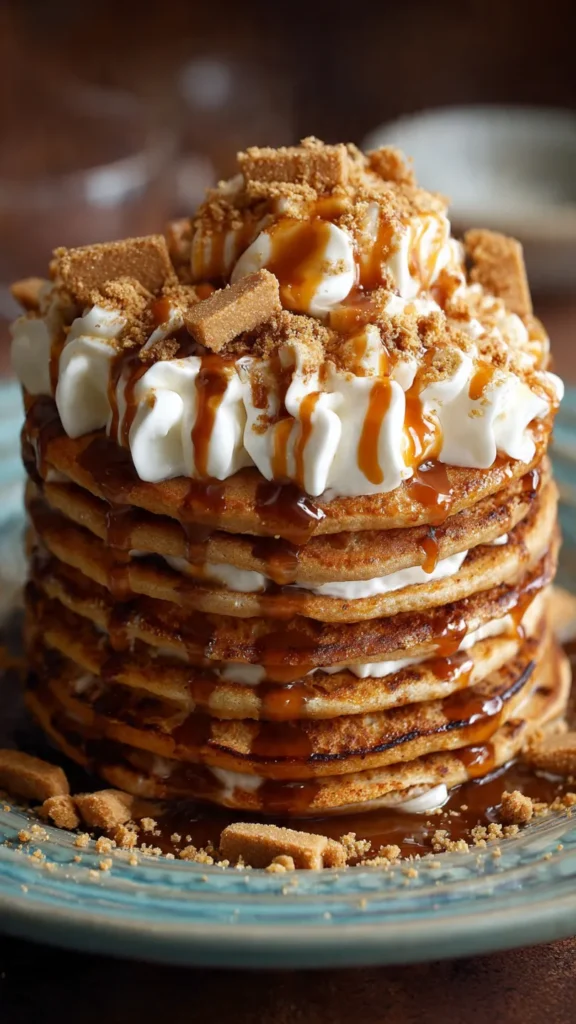
While your pancakes are staying warm, prepare the crowning glory of this dish. Pour your double or heavy cream into a clean, cold mixing bowl. Using a hand mixer or stand mixer fitted with the whisk attachment, whip the cream on medium-high speed until soft peaks form. You’ll know you’ve reached soft peaks when you lift the whisk and the cream forms peaks that gently fold over at the tips. This usually takes about 2 to 3 minutes.
Once you’ve achieved soft peaks, gently fold in the melted Biscoff spread using a rubber spatula. Use a folding motion rather than stirring to maintain the airiness of your whipped cream. The Biscoff will streak through the cream in beautiful ribbons, creating a marbled effect that’s as gorgeous as it is delicious.
Assembly and Presentation
Now for the fun part – building your masterpiece. Place one pancake on your serving plate as the foundation. Add a generous dollop of Biscoff whipped cream on top, then place another pancake on the cream. Continue layering pancakes and cream until you’ve built your desired height. Three to four pancakes per stack is typical, but feel free to go higher for dramatic effect.
Top your final pancake with an extra-generous portion of whipped cream. If you’re feeling particularly indulgent, warm some additional Biscoff spread slightly and drizzle it over the entire stack, letting it cascade down the sides. Add fresh banana slices arranged artfully on top, and finish with crumbled Lotus biscuits for that perfect textural contrast and visual appeal. Fresh berries like strawberries or blueberries also make excellent additions, providing a tart counterpoint to the sweet richness of the Biscoff.
Tips for Success
The key to perfectly cooked pancakes lies in maintaining consistent medium heat throughout the cooking process. If your pan gets too hot, reduce the heat slightly and let it cool for a moment before continuing. The resting period for your batter isn’t optional – those 5 minutes make a real difference in the final texture.
If you have leftover batter, store it in an airtight container in the refrigerator for up to 24 hours. This makes for incredibly easy weekday breakfasts – just give it a gentle stir and cook as directed. Cooked pancakes can be frozen between sheets of parchment paper and reheated in a toaster or oven when you’re ready for another indulgent breakfast.
For the fluffiest results, make sure your baking powder is fresh and your eggs are at room temperature. Cold eggs can cause the melted Biscoff to seize up and create lumps in your batter.
This Decadent Biscoff Pancake Stack is more than just breakfast – it’s an experience, a celebration, and a moment of pure indulgence that turns an ordinary morning into something memorable. Once you master this recipe, it’ll become your signature dish for special occasions and a beloved family favorite for years to come.