Best Spicy Coconut Curry Ramen
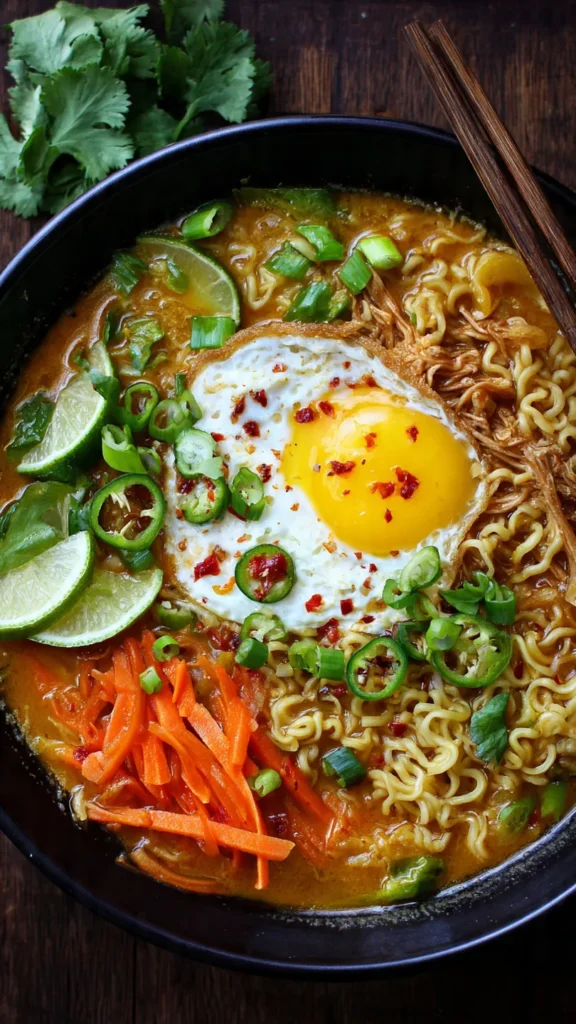
The Best Spicy Coconut Curry Ramen combines the heat of red curry with the richness of coconut milk, tender noodles, and vibrant veggies for a dish packed with flavor and warmth.
If you’re searching for the ultimate comfort food that delivers bold flavors and soul-warming satisfaction, this Best Spicy Coconut Curry Ramen is exactly what you need. This extraordinary dish transforms humble ramen noodles into a gourmet experience by marrying the fiery intensity of red curry paste with the silky smoothness of coconut milk. Every spoonful brings together chewy noodles, crisp vegetables, and an aromatic broth that strikes the perfect balance between heat and creaminess.
What sets this ramen apart from ordinary noodle soups is the carefully crafted harmony of flavors. The red curry paste provides a complex, multi-layered spiciness that awakens your palate, while the coconut milk rounds out the edges with its gentle sweetness and luxurious texture. This interplay creates a broth that is simultaneously bold and comforting, spicy yet smooth, making it impossible to stop at just one bowl.
The beauty of this recipe lies not only in its exceptional taste but also in its remarkable versatility. Whether you prefer your food mild or mouth-numbingly spicy, this ramen adapts to your preferences with ease. You can customize the heat level by adjusting the amount of red curry paste and chili flakes, add your choice of protein such as succulent shrimp, tender chicken, crispy tofu, or even soft-boiled eggs, and incorporate whatever vegetables you have on hand. The recipe is forgiving and encourages experimentation, making it perfect for both novice cooks and experienced home chefs.
Another compelling reason to add this recipe to your regular rotation is its impressive speed. Despite tasting like it’s been simmering for hours, this ramen comes together in just 30 minutes from start to finish. This makes it an ideal choice for busy weeknights when you need something quick yet satisfying, or for lazy weekends when you want restaurant-quality food without leaving your home. The minimal prep work and straightforward cooking process mean you’ll spend more time enjoying your meal and less time laboring in the kitchen.
The aromatic quality of this dish is another standout feature. As the garlic and ginger sizzle in sesame oil, your kitchen fills with an intoxicating fragrance that signals something special is cooking. When the coconut milk and curry paste join the party, the aroma becomes even more enticing, building anticipation for that first taste. This sensory experience transforms an ordinary dinner into an occasion worth savoring.
Table of Contents
Ingredients
For the Broth:
- 4 cups vegetable broth – provides a savory foundation and deep umami flavor
- 1 can (14 oz) coconut milk – creates a creamy, velvety texture and mild sweetness
- 2 tablespoons red curry paste – delivers authentic Thai heat and complexity
- 2 tablespoons soy sauce – adds saltiness and rich umami depth
- 1 tablespoon brown sugar – balances the spiciness with subtle sweetness
- 1 tablespoon fresh ginger, grated – contributes bright, warming zing
- 2 cloves garlic, minced – provides aromatic depth and savory notes
- 1 tablespoon sesame oil – imparts nutty richness and authentic Asian flavor
For the Noodles & Vegetables:
- 2 packs ramen noodles (discard the seasoning packets) – serves as the hearty base
- ½ cup carrots, julienned – adds crunch and natural sweetness
- ½ cup bell pepper, thinly sliced – provides color, crunch, and mild sweetness
For Garnishing:
- ¼ cup green onions, chopped – adds fresh, sharp flavor and visual appeal
- Fresh cilantro – contributes bright, herby freshness
- Red chili flakes, to taste – allows customizable heat level
- Lime wedges, for serving – provides bright citrus acidity to cut through richness
Instructions
Step 1: Prepare the Aromatic Base
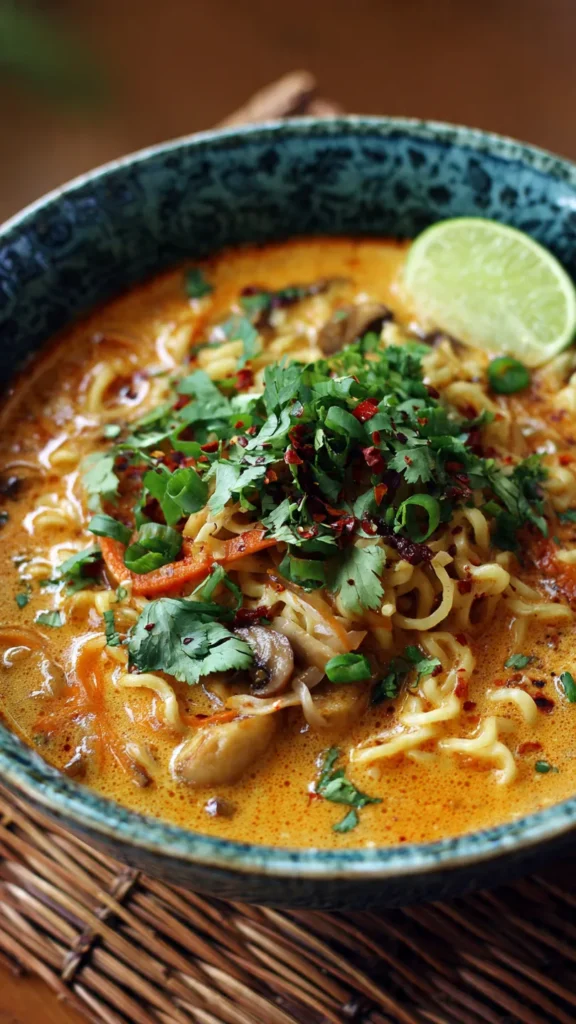
Begin by heating sesame oil in a large pot over medium heat. Allow the oil to warm for about 30 seconds until it shimmers slightly but doesn’t smoke. Add the minced garlic and freshly grated ginger to the pot, listening for that satisfying sizzle that indicates the oil is at the perfect temperature. Sauté these aromatics for 1–2 minutes, stirring continuously with a wooden spoon or silicone spatula. Watch carefully as the garlic and ginger become fragrant and just begin to turn golden. This crucial step releases essential oils and compounds that form the flavor foundation of your broth. Be careful not to burn the garlic, as this can create bitter undertones in your final dish.
Step 2: Build the Broth
Pour in the vegetable broth and coconut milk, combining them thoroughly. The coconut milk may appear separated in the can, which is normal—it will incorporate smoothly once heated. Add the red curry paste, using a whisk or spoon to break it down and distribute it evenly throughout the liquid. The paste may resist at first, but persistent stirring will help it dissolve completely. Stir in the soy sauce and brown sugar, ensuring both are fully incorporated. Bring the entire mixture to a gentle simmer over medium heat, reducing the temperature if it threatens to boil vigorously. Allow the broth to simmer gently for 5–7 minutes, giving the flavors time to meld and marry together. During this time, the curry paste will fully bloom, the coconut milk will integrate completely, and the broth will develop its characteristic rich color and complex aroma.
Step 3: Cook the Noodles
Add the ramen noodles directly to the simmering broth, gently separating them with chopsticks or a fork as they begin to soften. Cook according to the package instructions, which typically takes about 4–5 minutes, until the noodles reach your desired level of tenderness. Some prefer them slightly firm with a bit of chew, while others enjoy them fully tender. Stir occasionally during cooking to prevent the noodles from sticking together or to the bottom of the pot. The noodles will absorb some of the broth as they cook, concentrating the flavors even further.
Step 4: Add Fresh Vegetables
Toss in the julienned carrots and thinly sliced bell peppers, distributing them evenly throughout the pot. Stir gently to submerge the vegetables in the hot broth without breaking up the noodles. Cook for 2–3 minutes, just until the vegetables become tender but retain their vibrant colors and a pleasant crunch. Overcooking will cause them to lose their texture and nutritional value, so timing is important here. The residual heat will continue cooking them slightly even after you remove the pot from the heat.
Step 5: Perfect the Seasoning
This is your opportunity to fine-tune the flavors and make the dish truly your own. Taste the broth carefully, noting its balance of spice, salt, sweetness, and richness. If it needs more savory depth, add an additional splash of soy sauce, starting with half a tablespoon and tasting again. If the spice level is too intense, stir in a bit more brown sugar to create balance—sweetness has a remarkable ability to temper heat without eliminating it. For those who love serious spice, sprinkle in red chili flakes gradually, allowing each addition to distribute before tasting again. Remember that it’s easier to add more seasoning than to remove it, so adjust incrementally.
Step 6: Serve with Style
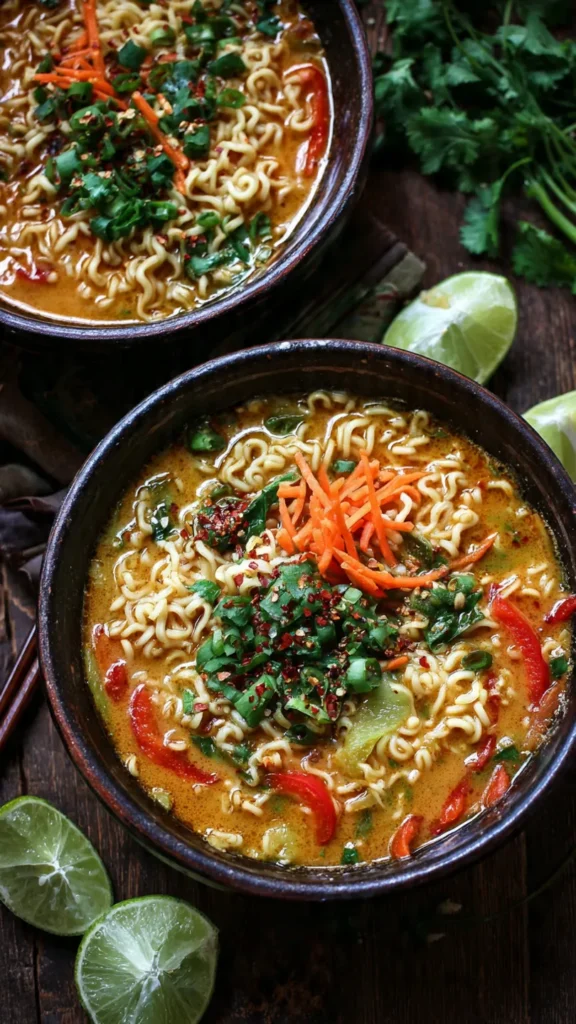
Ladle the piping hot soup into large serving bowls, ensuring each portion receives an equal distribution of broth, noodles, and colorful vegetables. The visual presentation matters—arrange the ingredients thoughtfully so the carrots and peppers are visible, creating an appetizing display of colors. Garnish generously with chopped green onions and fresh cilantro, which add not only visual appeal but also bright, fresh flavors that contrast beautifully with the rich broth. Sprinkle red chili flakes over the top for those who enjoy extra heat and visual drama. Place lime wedges on the side of each bowl, allowing diners to squeeze fresh citrus juice over their ramen at the table. This final touch of acidity brightens the entire dish and cuts through the richness of the coconut milk, creating a more balanced eating experience.
Expert Tips and Variations
For Extra Protein: Transform this vegetarian dish into a heartier meal by adding protein. Cube firm tofu and pan-fry it until golden before adding to the broth. Poach shrimp directly in the simmering broth for 3–4 minutes until pink and cooked through. Add pre-cooked shredded chicken during the final minutes of cooking, or soft-boil eggs separately and place them on top of each serving as a stunning garnish.
To Make It Gluten-Free: Substitute rice noodles or gluten-free ramen for the traditional wheat noodles, and replace soy sauce with tamari, which provides the same umami punch without the gluten. Verify that your curry paste is also gluten-free, as some brands include wheat-based ingredients.
For a Thicker, Richer Broth: Allow the soup to simmer uncovered for a few extra minutes to reduce and concentrate the flavors naturally. Alternatively, create a slurry by mixing one teaspoon of cornstarch with two tablespoons of cold water, then stir it into the simmering broth. This will thicken the consistency within minutes, creating a more luxurious, coating texture.
Storage Wisdom: If you anticipate leftovers, store the broth and noodles in separate airtight containers in the refrigerator. The noodles will continue absorbing liquid and become mushy if left in the broth. When ready to eat, reheat the broth, add fresh noodles, and enjoy. The broth keeps well for up to four days refrigerated or three months frozen.
This Best Spicy Coconut Curry Ramen proves that impressive, restaurant-quality meals don’t require complicated techniques or hard-to-find ingredients. With its perfect balance of heat, creaminess, and fresh flavors, it’s destined to become a favorite in your cooking repertoire.