TGI Friday’s Cajun Shrimp and Chicken Pasta (Restaurant Magic at Home!)
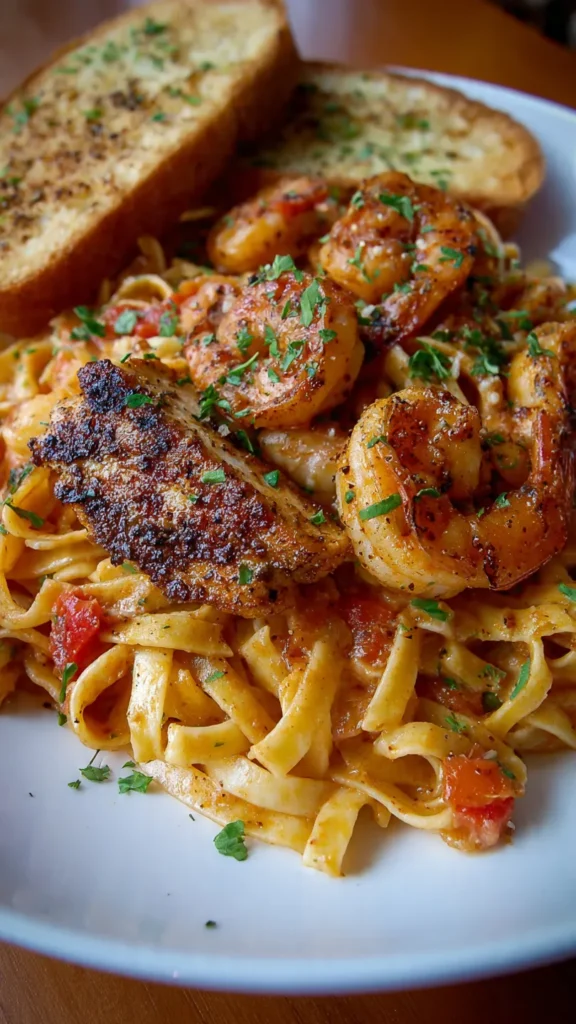
The moment that creamy, spicy Cajun pasta arrives at your table at TGI Friday’s, you know you’re in for something special—tender strips of seasoned chicken, plump sautéed shrimp, colorful bell peppers, and ribbons of fettuccine all coated in a rich, boldly spiced Alfredo sauce that hits the perfect balance between heat and indulgence. This iconic restaurant dish has been a menu favorite for years, satisfying cravings for bold Cajun flavors wrapped in creamy comfort food.
I started recreating this dish after countless orders at TGI Friday’s left me wishing I could enjoy it more often without the restaurant price tag or the wait. Through testing different spice blends, cream ratios, and cooking techniques, I developed a version that captures that signature restaurant taste while being completely doable on a weeknight. The key lies in layering the Cajun seasoning throughout—on the proteins, in the sauce, and even in the sautéed vegetables.
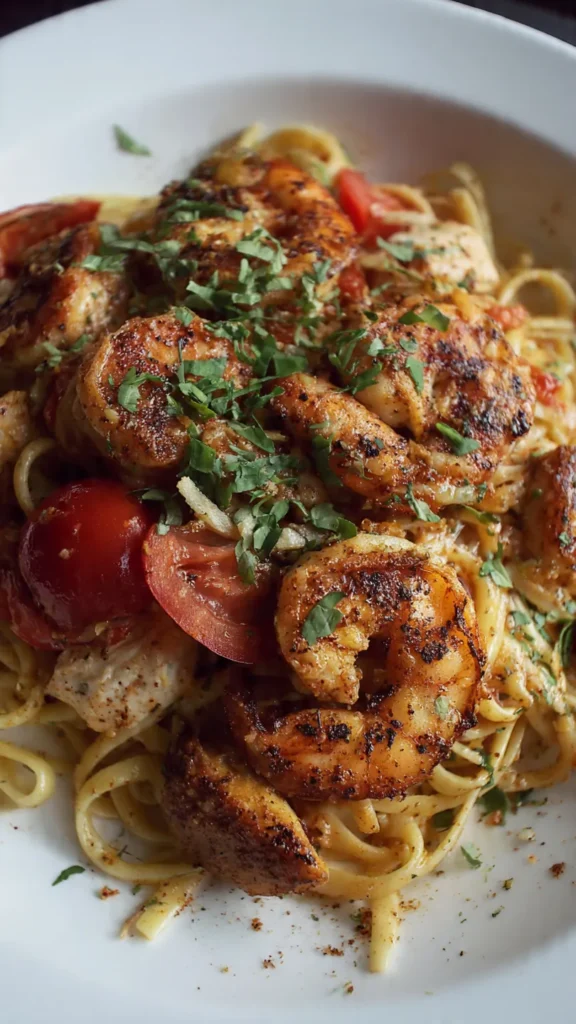
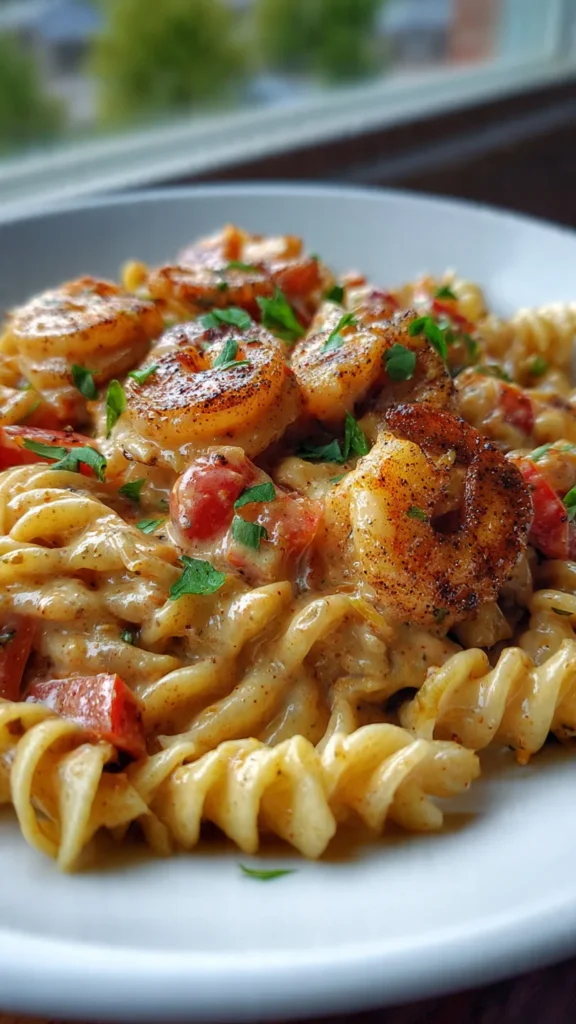
Expect fork-tender chicken breast slices, perfectly cooked shrimp with a slight char, sweet red bell peppers, and al dente fettuccine all swimming in a velvety Parmesan-spiked Cajun cream sauce that clings to every strand. This restaurant-quality dish comes together in about 35 minutes from start to finish, making it an impressive yet achievable weeknight dinner or special occasion meal.
Table of Contents
Recipe Quick Reference Module
Time Breakdown: Prep: 15 minutes | Active: 20 minutes | Total: 35 minutes
Output: 4 servings | Skill Level: Intermediate
At-a-Glance Details:
- Origin cuisine: Cajun-American Fusion / Restaurant Copycat
- Meal category: Dinner, Special Occasion, Date Night
- Dietary tags: High-protein, can be made gluten-free with pasta swap
- Ideal occasion: Date nights, family dinners, entertaining guests, Friday night treats
Value Proposition Points
- Restaurant-quality flavor — Recreates the bold, creamy TGI Friday’s taste with perfectly balanced Cajun spice and rich Alfredo sauce
- Ready in 35 minutes — Faster than making a restaurant reservation, with all components cooked in sequence for efficiency
- Protein-packed satisfaction — Combines both chicken and shrimp for a hearty, filling meal with over 40g protein per serving
- Customizable heat level — Adjust Cajun seasoning intensity from mild and family-friendly to authentically spicy Louisiana-style
- Impressive presentation — Looks and tastes like a $20+ restaurant entrée while costing a fraction to make at home
Featured Ingredient Analysis
Cajun Seasoning: This spice blend is the heart and soul of the dish, providing the characteristic smoky, spicy, herbal flavor profile. Quality Cajun seasoning typically includes paprika, cayenne, garlic powder, onion powder, oregano, thyme, and black pepper. Use a store-bought blend like Tony Chachere’s or Slap Ya Mama for convenience, or make your own to control salt and heat levels; the seasoning should be applied generously but not overwhelmingly.
Heavy Cream: The foundation of the luxurious Alfredo sauce requires full-fat heavy cream (36-40% fat) for proper thickness and richness. Lower-fat alternatives like half-and-half will produce a thinner, less velvety sauce that won’t coat the pasta as well. Don’t substitute with milk alone—the sauce will break and become watery; if lightening is necessary, use a 50/50 mix of heavy cream and half-and-half.
Large Shrimp: Jumbo or extra-large shrimp (16-20 count per pound) provide substantial bites that match the chicken pieces in size and presence. Smaller shrimp will overcook quickly and get lost in the sauce. Choose raw, peeled, deveined shrimp and cook them separately to control doneness; frozen shrimp work perfectly when thawed properly overnight in the refrigerator.
Component-Based Ingredient Lists
Primary Component [Protein]:
- 2 boneless, skinless chicken breasts (about 450-500g total)
- 340g (12 oz) large raw shrimp, peeled and deveined (16-20 count)
- 2 tablespoons Cajun seasoning (divided)
- 1 tablespoon olive oil (for chicken)
- 1 tablespoon butter (for shrimp)
- ½ teaspoon salt
- ¼ teaspoon black pepper
Secondary Component [Cajun Alfredo Sauce & Pasta]:
- 340g (12 oz) fettuccine pasta
- 2 tablespoons butter
- 3-4 garlic cloves, minced
- 1 large red bell pepper, sliced into thin strips
- ½ medium red onion, thinly sliced (optional)
- 480ml (2 cups) heavy cream
- 120ml (½ cup) chicken broth or white wine
- 1 cup freshly grated Parmesan cheese (plus extra for serving)
- 1-2 tablespoons Cajun seasoning (adjust to taste)
- ¼ teaspoon cayenne pepper (optional, for extra heat)
- Salt and black pepper to taste
- Fresh parsley, chopped (for garnish)
- Lemon wedges (optional, for serving)
Ingredient Intelligence:
- Premium quality crucial for: Heavy cream (must be at least 36% fat), Parmesan cheese (freshly grated from block, not pre-shredded), large shrimp (firm texture, sweet flavor)
- Temperature requirements: Chicken should be at room temperature 15 minutes before cooking for even doneness; heavy cream should be room temperature when added to prevent curdling
- Non-negotiable elements: Cajun seasoning (defines the entire dish), heavy cream (half-and-half won’t create proper sauce consistency), fresh Parmesan (pre-shredded contains anti-caking agents that affect melting)
Tool & Equipment Section
Required Items:
- Large pot — For boiling pasta (at least 4-quart capacity)
- Large skillet or sauté pan — 12-inch diameter, deep sides for tossing pasta with sauce
- Medium skillet — For cooking shrimp separately
- Tongs — For tossing pasta and turning proteins
- Sharp knife and cutting board — For slicing chicken, vegetables, and mincing garlic
Bonus Tools:
- Meat thermometer — Ensures chicken reaches 165°F (74°C) internal temperature without overcooking
- Microplane grater — For freshly grating Parmesan cheese and zesting lemon if using
- Pasta strainer — Standard colander works; reserve pasta water before draining
Preparation Method (Detailed Steps)
Step 1: Cook the Pasta
Bring a large pot of salted water to a rolling boil (use about 1 tablespoon salt per 4 quarts water). Add fettuccine and cook according to package directions until al dente, typically 10-12 minutes. The pasta should be tender but still have a slight bite in the center—it will continue cooking slightly when tossed with the hot sauce. Before draining, reserve 1 cup of starchy pasta cooking water, which can be used to adjust sauce consistency later. Drain pasta and set aside; do not rinse, as the surface starch helps sauce adhere.
Pro tip: Start the pasta first so it finishes around the same time as the sauce components, ensuring everything comes together hot and fresh.
Step 2: Season and Cook the Chicken
Pat chicken breasts dry with paper towels, then slice them horizontally into thinner cutlets or cut into bite-sized strips for faster, more even cooking. Season both sides generously with 1 tablespoon Cajun seasoning, salt, and black pepper. Heat 1 tablespoon olive oil in a large skillet over medium-high heat until shimmering. Add chicken pieces in a single layer (work in batches if needed to avoid crowding) and cook 4-5 minutes per side until golden brown on the outside and internal temperature reaches 165°F (74°C). Transfer cooked chicken to a plate and tent loosely with foil to keep warm.
Pro tip: Don’t move the chicken too early—let it develop a golden crust before flipping, which adds flavor and prevents sticking.
Step 3: Cook the Shrimp
In a separate medium skillet, melt 1 tablespoon butter over medium-high heat. Pat shrimp completely dry with paper towels, then season with ½ tablespoon Cajun seasoning. Once butter is bubbling, add shrimp in a single layer and cook 2-3 minutes per side until they turn pink, opaque, and curl into a C-shape—avoid overcooking or they’ll become rubbery. The internal temperature should reach 120-130°F (49-54°C). Remove from heat immediately and set aside with the chicken.
Pro tip: Cook shrimp separately from chicken to control doneness precisely; shrimp cook much faster and need different timing to stay tender.
Step 4: Sauté Vegetables and Build the Sauce Base
Using the same large skillet used for chicken (don’t wipe it out—the browned bits add flavor), reduce heat to medium and add 2 tablespoons butter. Once melted, add minced garlic, sliced red bell pepper, and onion if using. Sauté for 3-4 minutes, stirring frequently, until vegetables are softened and fragrant and garlic is golden but not burned. The peppers should retain a slight crunch for texture contrast.
Step 5: Create the Cajun Alfredo Sauce
Pour in chicken broth (or white wine) and scrape up any browned bits from the bottom of the pan using a wooden spoon—this deglazes the pan and adds depth to the sauce. Let the liquid simmer and reduce by half, about 2-3 minutes. Reduce heat to medium-low, then slowly pour in heavy cream while stirring constantly. Add 1-2 tablespoons Cajun seasoning and cayenne pepper if using. Let the sauce gently simmer (don’t boil) for 3-4 minutes until it starts to thicken slightly and coats the back of a spoon. The sauce should be smooth and velvety, not bubbling aggressively.
Pro tip: Keep heat low once cream is added to prevent curdling or the sauce breaking; gentle heat allows flavors to meld while cream thickens naturally.
Step 6: Add Cheese and Combine Everything
Remove skillet from direct heat and gradually stir in freshly grated Parmesan cheese, adding it in small handfuls and stirring until fully melted and incorporated. Taste and adjust seasoning with additional Cajun spice, salt, or black pepper as needed—the sauce should be creamy, well-seasoned, and have a noticeable but not overwhelming kick. Add the cooked fettuccine to the sauce and toss with tongs until every strand is evenly coated. If sauce is too thick, add reserved pasta water 2 tablespoons at a time until desired consistency is reached.
Step 7: Plate and Serve
Divide pasta among four serving plates or bowls, twirling it into neat portions. Top each serving with sliced chicken and shrimp arranged attractively. Garnish with freshly chopped parsley, additional grated Parmesan, and a light dusting of Cajun seasoning for visual appeal. Serve immediately with lemon wedges on the side for brightening the rich sauce, and offer extra Parmesan and crushed red pepper flakes at the table.
Professional Guidance Section
Temperature Control: Keep sauce at a gentle simmer, never a rolling boil, once cream is added—high heat causes dairy to break and separate, resulting in a grainy, oily sauce instead of smooth and creamy.
Timing Patience: Let chicken rest 3-5 minutes after cooking before slicing; this allows juices to redistribute throughout the meat rather than running out onto the cutting board, keeping it moist and flavorful.
Sauce Consistency Secret: Freshly grated Parmesan melts into the sauce smoothly and acts as a natural thickener; pre-shredded cheese contains cellulose and won’t incorporate properly, leaving the sauce grainy with unmelted cheese specks.
Avoid This Error: Don’t add shrimp at the beginning of sauce preparation as some recipes suggest—shrimp cook in minutes and will become tough and rubbery if simmered in hot sauce for extended periods.
Testing Insight: Through multiple batches, I discovered that seasoning proteins separately before cooking, then adding more Cajun spice to the sauce, creates better layered flavor than just relying on the sauce alone for seasoning.
Adaptation & Variation Guide
Dietary Adjustments:
Gluten-Free Conversion: Substitute regular fettuccine with gluten-free pasta (rice-based or chickpea varieties work well); cook according to package directions and note that gluten-free pasta may need slightly less cooking time to avoid mushiness.
Lighter Version: Replace half the heavy cream with half-and-half and reduce Parmesan to ¾ cup; add 1 tablespoon cornstarch mixed with 2 tablespoons cold milk to help thicken the lighter sauce (reduces calories by approximately 30% per serving).
Dairy-Free Alternative: Use coconut cream (full-fat canned, not coconut milk) in place of heavy cream and nutritional yeast instead of Parmesan; the flavor will differ but still provides creamy, satisfying texture with Cajun spice.
Flavor Transformations:
Extra Spicy Cajun: Double the cayenne pepper, add sliced fresh jalapeños with the bell peppers, and finish with a drizzle of hot sauce or sprinkle of crushed red pepper flakes for heat lovers.
Lemon-Garlic Twist: Add zest of 1 lemon to the sauce and increase garlic to 5-6 cloves for a brighter, more aromatic profile that balances the richness.
Seafood-Only Version: Omit chicken and double the shrimp, or add scallops, crawfish tails, or chunks of firm white fish like mahi-mahi for an all-seafood feast.
Presentation Approaches:
Classic Method: Serve family-style in a large pasta bowl, with proteins arranged on top and garnished with fresh herbs and lemon wedges.
Contemporary Style: Plate individually with pasta twirled into nests, proteins artfully arranged, and a drizzle of sauce over the top with microgreens for an elegant restaurant presentation.
Entertaining Format: Prep all components ahead (cook proteins and make sauce base), then combine and heat everything together just before serving for stress-free dinner parties.
Preservation & Advance Prep
Prepare-Ahead Strategy:
- Cajun seasoning blend: Mix homemade Cajun spices up to 1 month ahead; store in airtight container at room temperature
- Cook proteins: Season and cook chicken and shrimp up to 24 hours ahead; refrigerate separately and reheat gently in sauce before serving
- Prep vegetables: Slice bell peppers, onions, and mince garlic up to 1 day ahead; store refrigerated in airtight containers
- Maximum advance time: Make entire dish up to 2 hours ahead and keep warm on lowest oven setting (93°C/200°F), though texture is best when served immediately
Storage Guidelines:
Refrigerated: Store leftovers in airtight container up to 3 days; sauce will thicken considerably when chilled and may need thinning with cream, broth, or pasta water when reheating.
Frozen: Cream-based sauces don’t freeze well as dairy tends to separate and become grainy upon thawing; if you must freeze, store only the cooked, seasoned proteins and vegetables separately (up to 2 months), then make fresh sauce when ready to serve.
Optimal Reheating:
Stovetop method (best): Transfer leftovers to a skillet over low heat, add 2-4 tablespoons heavy cream or milk, and stir gently until warmed through and sauce smooths out, about 5-7 minutes—avoid high heat which can make proteins tough.
Microwave method (quick): Place portion in microwave-safe bowl, add 1-2 tablespoons cream, cover loosely, and heat on 50% power in 1-minute intervals, stirring between, until hot throughout (about 2-3 minutes total).
Complementary Serving Suggestions
Ideal Pairings:
- Garlic bread or breadsticks — Perfect for soaking up the creamy Cajun sauce; brush with garlic butter and toast until golden
- Caesar salad — Cool, crisp romaine with tangy dressing provides refreshing contrast to the rich, spicy pasta
- Roasted asparagus or green beans — Simple green vegetables balance the indulgence and add color to the plate
Menu Building:
- Date Night Dinner: Start with bruschetta or spinach artichoke dip, serve Cajun pasta as main, finish with cheesecake for a complete TGI Friday’s-inspired menu
- Family Dinner: Pair with simple garden salad, crusty bread, and roasted vegetables for a well-rounded weeknight feast
- Dinner Party: Serve alongside other Italian-American favorites like chicken parmesan, shrimp scampi, or mushroom risotto for a pasta bar spread
Nutritional Information (Single Serving – 1 of 4 servings)
Calories: 785 | Protein: 45g | Carbohydrates: 52g | Fat: 44g | Fiber: 3g | Sugar: 5g | Sodium: 980mg
Disclaimer: Calculated using standard USDA database values for listed ingredients. Actual nutrition varies based on specific brands, portion sizes, and modifications. Values are approximate estimates for informational purposes.
Reader FAQ Module
Q: Can I make this without shrimp?
A: Absolutely—double the chicken or substitute with sliced andouille sausage for a protein-packed alternative with even more Cajun flavor.
Q: My sauce is too thick—what went wrong?
A: Either too much Parmesan or sauce reduced too much; thin it gradually with reserved pasta water, chicken broth, or additional cream stirred in over low heat until desired consistency.
Q: What’s the best way to prevent the sauce from breaking?
A: Keep heat at medium-low once cream is added, never let it boil, and ensure Parmesan is added off heat while stirring constantly—high heat and pre-shredded cheese are the main culprits.
Q: How do I know when the shrimp are properly cooked?
A: Shrimp are done when they turn pink/orange, feel firm (not mushy), and curl into a C-shape; if they curl into an O-shape they’re overcooked and will be tough.
Q: Can I use a different pasta shape?
A: Yes—penne, linguine, or bowtie pasta all work well; choose shapes with surface area that holds the creamy sauce effectively.
Q: Is homemade Cajun seasoning better than store-bought?
A: Homemade lets you control salt and heat levels precisely, but quality store-bought brands like Tony Chachere’s or Slap Ya Mama are excellent time-savers with authentic flavor.
Background & Heritage Context
TGI Friday’s, founded in 1965 in New York City, pioneered the concept of the casual dining restaurant with a bar atmosphere, becoming famous for inventive American cuisine with bold, creative flavors. The chain’s Cajun Shrimp and Chicken Pasta emerged during the 1990s Cajun food craze, when Louisiana-inspired dishes became mainstream across American restaurant menus. This dish represented a fusion of Italian-American pasta traditions with Louisiana Cajun seasoning, creating an accessible version of bold Southern flavors for a broad audience.
The dish evolved from an earlier menu item, Spicy Cajun Chicken Pasta, which was one of the chain’s most popular offerings in the late 1990s. As customer preferences shifted toward more substantial, protein-rich entrées, TGI Friday’s added large shrimp and enhanced the sauce, creating the version that became a signature menu item. The combination of two proteins with creamy Alfredo sauce and Cajun spices appealed to diners seeking indulgence and bold flavor in one dish.
Cajun cuisine itself originated with the Acadian people of Louisiana, who developed a robust, spice-forward cooking style using locally available ingredients like bell peppers, onions, celery (the “holy trinity”), and cayenne-based seasonings. While this restaurant adaptation is far from traditional Louisiana cooking, it successfully introduced mainstream America to the appeal of Cajun spices and helped popularize the flavor profile that continues to influence chain restaurant menus today.
Print-Optimized Recipe Summary
TGI Friday’s Cajun Shrimp and Chicken Pasta Copycat
Tender chicken and shrimp in creamy Cajun Alfredo sauce with bell peppers and fettuccine—serves 4
Ingredients:
Protein: 2 chicken breasts, 340g shrimp (peeled/deveined), 2 tbsp Cajun seasoning, 1 tbsp olive oil, 1 tbsp butter, salt, pepper
Pasta & Sauce: 340g fettuccine, 2 tbsp butter, 3-4 garlic cloves (minced), 1 red bell pepper (sliced), ½ red onion (sliced), 480ml heavy cream, 120ml chicken broth, 1 cup grated Parmesan, 1-2 tbsp Cajun seasoning, cayenne to taste, fresh parsley
Method:
- Cook fettuccine al dente; reserve 1 cup pasta water before draining
- Season chicken with 1 tbsp Cajun spice; cook in olive oil 4-5 min per side until 165°F; set aside
- Season shrimp with ½ tbsp Cajun spice; cook in butter 2-3 min per side until pink; set aside
- In same chicken pan, sauté garlic, bell pepper, onion in 2 tbsp butter 3-4 min
- Add chicken broth, simmer 2-3 min, then add cream and 1-2 tbsp Cajun seasoning
- Simmer gently 3-4 min until sauce thickens; remove from heat and stir in Parmesan
- Toss pasta with sauce, add pasta water if needed; top with chicken and shrimp; garnish with parsley
Essential Notes: Cook shrimp separately to prevent overcooking | Use freshly grated Parmesan for smooth sauce | Keep sauce at gentle simmer, never boil | Season proteins and sauce separately for layered flavor