Homemade Margherita Pizza: The Ultimate Guide to Pizza Perfection
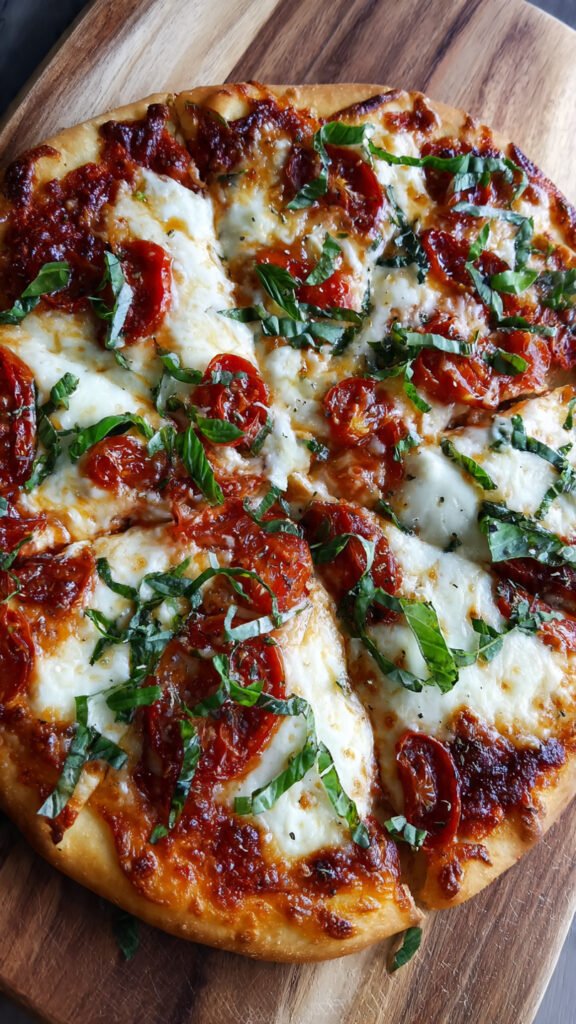
Few dishes capture the essence of Italian cuisine quite like a perfectly executed Margherita pizza. This iconic creation showcases the beauty of minimalism—a pillowy yet crispy crust topped with tangy tomato sauce, melted mozzarella, and fragrant basil leaves. Unlike heavily loaded pizzas, the Margherita lets each ingredient shine through its own merit.
Born in 1889 as a tribute to Queen Margherita of Savoy, this pizza was deliberately designed to mirror the Italian tricolor: red tomatoes, white mozzarella, and green basil. What began as royal flattery has evolved into the ultimate benchmark for pizza craftsmanship. Today, it remains the choice of purists who understand that exceptional pizza doesn’t require dozens of toppings—just impeccable ingredients and proper technique.
This comprehensive guide will equip you with everything needed to master Margherita pizza at home. We’ll cover ingredient selection, detailed preparation methods, professional techniques, and troubleshooting tips to ensure restaurant-quality results from your own kitchen.
Why Quality Ingredients Matter
Since Margherita pizza contains only a handful of components, each one carries significant weight in the final outcome. Mediocre ingredients will produce mediocre pizza, while premium selections create something extraordinary. Invest in authentic San Marzano tomatoes, genuine whole milk mozzarella, and fresh basil whenever possible. The difference is immediately noticeable.
What You’ll Need (Serves 4)
For the pizza:
- 1 pound pizza dough (homemade or quality store-bought)
- ½ cup crushed San Marzano tomatoes from can
- 2 teaspoons extra-virgin olive oil, plus more for finishing
- Pinch of fine sea salt
- 1 cup shredded whole milk mozzarella cheese
- Large handful fresh basil leaves
- All-purpose flour for work surface
- Semolina flour for dusting
Time Investment
Preparation: 15 minutes
Baking: 10–12 minutes
Total commitment: 25–30 minutes
Nutritional Information
Each serving provides approximately 364 calories, making this a relatively balanced meal when paired with a fresh salad.
Per serving breakdown:
- Calories: 364 kcal
- Protein: 15g
- Total fat: 14g
- Carbohydrates: 40g
- Dietary fiber: 2g
- Sugars: 3g
- Sodium: 580mg
Keep in mind these values fluctuate based on specific brands and measurements used.
Detailed Preparation Instructions
Step 1: Establish Proper Heat
Professional pizzerias bake at temperatures exceeding 800°F, which home ovens cannot reach. However, you can still achieve excellent results by maximizing your oven’s potential.
Position your pizza stone or heavy-duty baking sheet on the middle rack. Set your oven to its highest temperature—typically 500°F or 260°C. Allow a full 30 minutes of preheating time. This extended period ensures the stone absorbs sufficient heat to create that coveted crispy bottom crust.
Critical insight: A properly heated stone makes the difference between soggy and crispy crust. Don’t rush this step.
Step 2: Create the Sauce
Traditional Margherita sauce remains uncooked, preserving the tomatoes’ bright, fresh flavor. This approach differs from heavily simmered marinara sauces.
Empty ½ cup of crushed San Marzano tomatoes into a medium bowl. Add 2 teaspoons of high-quality olive oil and a generous pinch of sea salt. Stir thoroughly until the oil incorporates evenly throughout the tomatoes.
Why San Marzano tomatoes? These volcanic-soil-grown Italian tomatoes offer natural sweetness with balanced acidity. They require no added sugar or lengthy cooking to taste exceptional. If unavailable, seek the best quality canned whole tomatoes you can find and crush them yourself.
Step 3: Shape Your Foundation
The crust serves as your pizza’s foundation—it must be sturdy enough to support toppings while remaining tender and airy.
Dust your work surface generously with all-purpose flour. Place your pound of dough in the center and begin gently pressing from the middle outward, working in a circular motion. Use your fingertips rather than a rolling pin to preserve air pockets that create texture. Aim for a 12-inch round with slightly thicker edges that will puff into a golden rim during baking.
Transfer your shaped dough onto parchment paper dusted with semolina flour. The semolina provides a non-stick surface while adding subtle crunch to the bottom crust.
Pro technique: If the dough resists stretching and keeps shrinking back, let it rest covered for 10 minutes. This relaxes the gluten and makes shaping effortless.
Step 4: Build Your Pizza
Less is genuinely more with Margherita pizza. Overloading causes steaming rather than baking, resulting in a soggy center.
Spread your prepared tomato sauce across the dough using the back of a spoon, leaving approximately 1 inch bare around the perimeter for the crust. Apply a thin, even layer—you should still see dough through the sauce in spots.
Distribute the shredded mozzarella evenly over the sauce. Resist the temptation to add extra cheese. One cup provides perfect coverage without overwhelming moisture.
Tear fresh basil leaves and scatter them across the surface. Some will crisp slightly in the oven while others remain aromatic and bright.
Step 5: The Baking Process
This stage transforms raw ingredients into culinary magic.
Using a pizza peel or the back of a baking sheet, carefully slide your pizza—parchment and all—onto the preheated stone. Work confidently but cautiously to avoid disturbing your toppings.
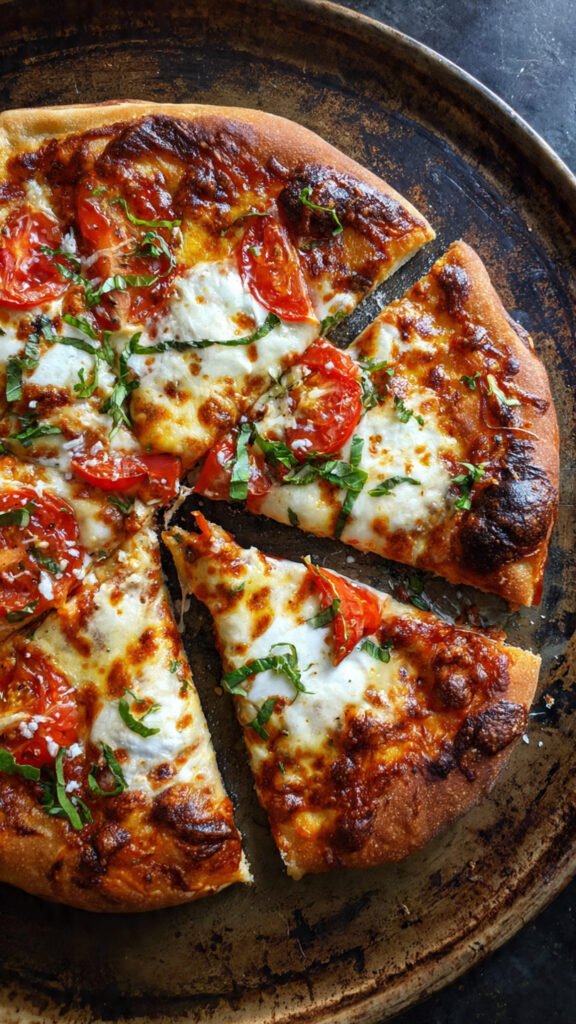
Bake for 10–12 minutes, monitoring closely during the final minutes. You’re looking for a golden-brown crust with darker spots of char, bubbling cheese, and visible moisture evaporation.
Temperature variation note: Every oven behaves differently. Your pizza might be ready in 8 minutes or require 14. Trust visual cues over the clock.
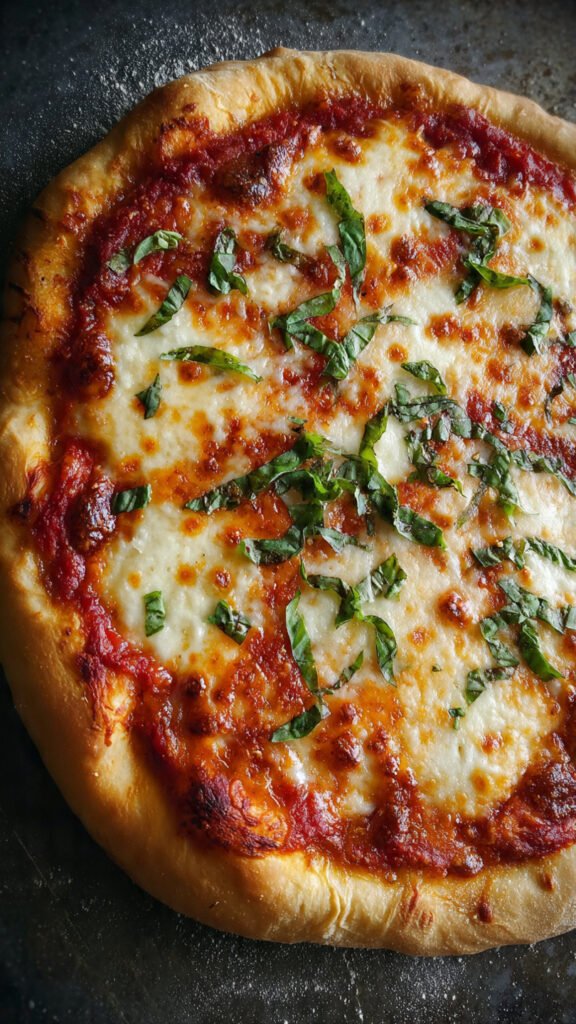
Step 6: Finishing Touches
Remove your masterpiece from the oven using a peel or wide spatula. Allow it to rest for 1–2 minutes—this brief pause lets the cheese set slightly, making slicing cleaner.
Drizzle additional extra-virgin olive oil across the surface in a spiral pattern. This final touch adds luxurious richness and enhances the aroma. If desired, add a few fresh basil leaves for vibrant color and fragrance.
Slice into 6–8 pieces and serve immediately while the crust remains crisp and the cheese stretches with each bite.
Professional Tips and Techniques
Temperature Matters for Dough
Cold dough from the refrigerator is stiff and prone to tearing. Remove it at least 30 minutes before use, allowing it to reach room temperature. This makes stretching easier and prevents frustration.
Moisture Management
Too much moisture creates soggy pizza. If using fresh mozzarella instead of shredded, slice it and pat both sides dry with paper towels before adding to your pizza. This removes excess water that would otherwise steam during baking.
Equipment Upgrades
A pizza stone or steel transforms home pizza-making by providing consistent, intense bottom heat. These tools retain and radiate heat far better than standard baking sheets, producing pizzeria-quality crust texture.
Even Baking Strategy
Rotate your pizza 180 degrees halfway through baking time. This compensates for hot spots in your oven and ensures uniform browning.
Pairing Suggestions
While Margherita pizza stands alone beautifully, thoughtful pairings elevate the experience:
Starter: Classic Caprese salad with aged balsamic reduction
Beverage: Light Chianti, Pinot Grigio, or crisp Italian lager
Side: Arugula salad dressed with lemon juice and olive oil
Dessert: Creamy tiramisu or refreshing lemon sorbet
Storage and Reheating
Storing leftovers:
Wrap individual slices in aluminum foil or place in airtight containers. Refrigerate for up to 3 days.
Reheating for best results:
The skillet method works exceptionally well—place slices in a covered pan over medium heat for 5–7 minutes. The bottom crisps while trapped steam reheats the top. Alternatively, reheat in a 375°F oven for 5–7 minutes.
Final Reflections
Margherita pizza exemplifies how simplicity, when executed thoughtfully, produces extraordinary results. This recipe demands no exotic ingredients or complicated techniques—only attention to detail and respect for quality components. Whether you’re feeding family on a busy weeknight or impressing guests at a dinner party, homemade Margherita pizza delivers satisfaction that transcends its humble ingredients. Master this foundation, and you’ll unlock countless pizza variations built on the same fundamental principles of heat, timing, and restraint.