Homemade Stollen – Classic German Christmas Bread (Festive Tradition in 3 Hours!)
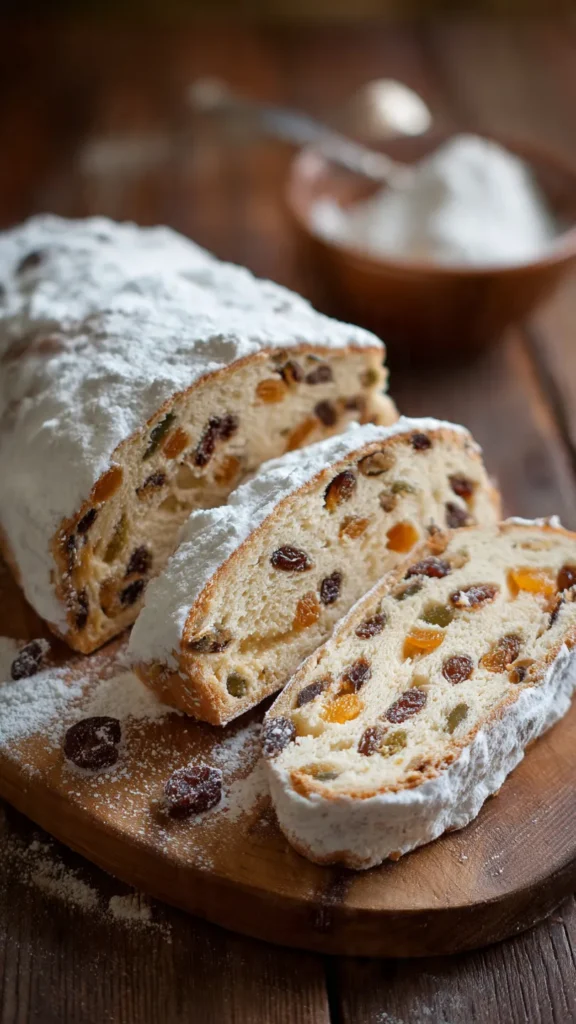
Imagine slicing into a golden, powdered-sugar-dusted loaf to reveal a sweet treasure: rum-soaked raisins, jewel-toned candied citrus peel, toasted almonds, and a ribbon of creamy marzipan running through the center, all enveloped in buttery, spiced dough that melts on your tongue. This isn’t just bread—it’s Stollen, Germany’s most beloved Christmas tradition, a yeasted fruit bread so rich and aromatic that it transforms any morning into a celebration.
I first tasted authentic Stollen during a Christmas market in Dresden, where this bread has been baked since the 15th century. What makes Stollen truly magical is how it improves with age—the flavors deepen and meld over two weeks as the fruit juices penetrate every crumb, creating moisture and complexity that fresh-baked bread simply cannot match. The intoxicating aroma of cardamom, cinnamon, and rum-soaked fruit filling your kitchen announces that the holidays have officially arrived.
Whether you’re honoring German heritage, creating new family traditions, or seeking an impressive homemade gift, expect bakery-quality results that rival anything from Dresden’s famous Christkindlmarkt—and the satisfaction of knowing you crafted this masterpiece yourself.
Table of Contents
Recipe Quick Reference Module
Time Breakdown: Prep: 45 min | Rise: 2 hours | Bake: 35 min | Total: 3+ hours (plus optional 2-week aging)
Output: 2 large loaves (24 servings) | Skill Level: Intermediate
At-a-Glance Details:
- Origin cuisine: German (Dresden traditional)
- Meal category: Breakfast / Dessert / Holiday Bread
- Dietary tags: Vegetarian, Can be made without alcohol
- Ideal occasion: Christmas celebrations, holiday gifts, Advent season, special breakfast
Value Proposition Points
- Age-Worthy Excellence — Flavor actually improves over 2 weeks as fruit juices permeate dough, creating deeper complexity
- Authentic German Tradition — Centuries-old recipe delivers true Dresden-style Stollen with traditional spice blend and marzipan center
- Gift-Ready Presentation — Makes two loaves, perfect for keeping one and gifting another wrapped in festive tradition
- Freezer-Friendly Longevity — Freezes beautifully up to 2 months, allowing early holiday preparation without stress
- Impressive Complexity — Layers of flavor from rum-soaked fruit, warm spices, citrus zest, and marzipan create sophisticated taste profile
Featured Ingredient Analysis
Rum-Soaked Dried Fruit
The soul of Stollen—raisins and candied citrus peel macerated in dark rum create intense flavor pockets throughout the bread. Soaking dried fruit (ideally overnight, minimum 30 minutes) allows alcohol to penetrate and plump the fruit while infusing it with complex warmth. The rum doesn’t just flavor the fruit; it also acts as a preservative that extends Stollen’s shelf life significantly. Quality matters enormously—homemade candied citrus peel transforms this bread from good to extraordinary with bright, natural citrus oils that commercial versions lack. The fruit-to-dough ratio is generous, creating a luxurious, almost confection-like bread studded with sweet jewels.
Marzipan (Almond Paste Center)
The hidden treasure running through Stollen’s center that defines authentic German preparation. Marzipan—a paste of ground almonds and sugar—adds creamy sweetness and subtle almond fragrance that complements rather than competes with fruit and spice. As the bread ages, marzipan’s moisture migrates into surrounding dough, keeping the loaf tender and creating flavor harmony. You can make marzipan from scratch with blanched almonds, powdered sugar, and almond extract, or purchase quality European brands like Odense or Niederegger. Some bakers omit marzipan for personal preference, but traditionalists consider it essential to authentic Stollen.
Warm Spice Blend (Cardamom, Mace, Cinnamon)
The aromatic signature that distinguishes Stollen from ordinary fruit bread. Cardamom provides floral, eucalyptus-like complexity; mace (nutmeg’s outer covering) adds warm, peppery sweetness; and cinnamon contributes familiar holiday comfort. This specific spice combination reflects centuries of German baking tradition when exotic spices signified luxury and celebration. Freshly ground spices deliver significantly more aroma and flavor than old, pre-ground versions. The spices perfume the entire house during baking and create nostalgic, memory-triggering fragrance that defines Christmas for millions.
Component-Based Ingredient Lists
Primary Component [Enriched Dough]:
- 4 to 4½ cups all-purpose flour, plus more for kneading (amount varies based on fruit moisture)
- 1 cup lukewarm whole milk (105-110°F)
- 3 teaspoons active dry yeast or instant yeast
- ½ cup granulated sugar (divided: 2 tbsp for proofing, remainder for dough)
- 1 large egg plus 2 large egg yolks, room temperature
- ¾ cup unsalted butter (1½ sticks), softened to room temperature
- 2 teaspoons pure vanilla extract
- Zest of 1 large lemon (about 1 tablespoon)
- 1 teaspoon salt
- ¾ teaspoon ground cardamom
- ¾ teaspoon ground mace (or substitute nutmeg)
- ½ teaspoon ground cinnamon
Fruit & Nut Mixture:
- 9 oz raisins (about 2 cups, golden or dark)
- 3 oz candied lemon peel, finely diced (homemade strongly recommended)
- 3 oz candied orange peel, finely diced (homemade strongly recommended)
- 3 oz blanched slivered almonds, finely chopped (about ⅔ cup)
- ⅓ cup quality dark rum (or substitute orange juice for alcohol-free)
Marzipan Filling:
- 8 oz marzipan or almond paste (divided into two 4-oz portions for two loaves)
Butter & Sugar Coating:
- ½ cup (1 stick) unsalted butter, melted
- 4 cups powdered sugar for generous dusting (plus extra for second coating)
Ingredient Intelligence:
- Premium quality crucial for: Candied citrus peel (homemade vs. commercial makes dramatic flavor difference), marzipan (quality almond paste), dark rum (better flavor penetrates fruit), spices (freshly ground preferred)
- Temperature requirements: All dough ingredients (milk, butter, eggs) must be room temperature or lukewarm for proper yeast activation and smooth mixing
- Non-negotiable elements: Soaking fruit in rum is essential for authentic flavor and moisture; skip at your peril
Tool & Equipment Section
Required Items:
- Stand mixer with dough hook attachment (or strong arms for hand kneading)
- Large mixing bowl (for soaking fruit)
- Two baking sheets lined with parchment paper
- Rolling pin (for shaping dough ovals)
- Pastry brush (for butter application)
- Instant-read thermometer (for milk temperature and doneness testing)
- Wooden skewer or toothpick (for poking holes to absorb butter)
Bonus Tools:
- Kitchen scale — Professional bakers measure by weight for consistent results
- Bench scraper — Helps divide dough precisely and clean work surface
- Plastic wrap and aluminum foil — Essential for wrapping aged Stollen properly
Preparation Method (Detailed Steps)
Step 1: Soak the Fruit and Prepare Components
At least 2-4 hours before baking (or ideally overnight), combine raisins, candied lemon peel, candied orange peel, chopped almonds, and rum in a large bowl. Stir well to distribute rum, cover with plastic wrap, and let macerate at room temperature, stirring occasionally. The fruit will absorb rum and plump beautifully. Before using, drain any excess liquid—too much moisture makes dough sticky. Pro tip: Start fruit soaking the night before for deepest flavor penetration and softest texture.
Step 2: Activate the Yeast and Build the Dough
In the bowl of a stand mixer, combine lukewarm milk (test temperature—should feel barely warm on your wrist), yeast, and 2 tablespoons sugar. Whisk gently and let stand 10 minutes until mixture becomes frothy and bubbly—this proves yeast is alive. Add remaining sugar, flour, egg, egg yolks, softened butter, vanilla extract, lemon zest, salt, cardamom, mace, and cinnamon. Using a wooden spoon, stir until mixture comes together into shaggy dough. Attach dough hook and knead on low speed for 7-10 minutes until dough becomes smooth, elastic, and slightly tacky but not sticky. Success marker: Dough should pull away from bowl sides and pass the windowpane test—when stretched, it forms a thin membrane without tearing.
Step 3: Incorporate Fruit and First Rise
With mixer on lowest speed, gradually add the drained fruit-nut mixture to the dough, mixing just until evenly distributed throughout. Dough will look crowded with fruit—this is correct. Transfer dough to a large, lightly oiled bowl, turn to coat all sides, cover with plastic wrap or damp towel, and place in a warm, draft-free location. Let rise 60-90 minutes until doubled in size. The enriched dough rises more slowly than plain bread dough due to butter and sugar content, so be patient. Timing alert: Room temperature dramatically affects rise time; warmer environments speed rising, cooler slow it down.
Step 4: Shape the Traditional Stollen Form
Turn risen dough onto a lightly floured work surface and divide into two equal portions using a bench scraper or knife. Pat or roll each portion into an oval approximately 10 inches long and 1 inch thick—don’t roll too thin or marzipan will break through during baking. Divide marzipan into two 4-ounce portions and roll each into a log the length of the dough oval. Place marzipan log lengthwise down the center of each dough oval. Fold the left side of dough over to cover marzipan, then fold the right side over the left so its edge sits just left of center, creating the characteristic asymmetrical shape. Pinch and tuck the top and bottom ends to seal marzipan inside. Using the bottom edge of your hand, press firmly lengthwise along the dough about 1 inch right of center to create the distinctive hump and folded appearance.
Step 5: Second Rise and Bake to Golden Perfection
Transfer shaped loaves to parchment-lined baking sheets, spacing them well apart. Cover loosely with plastic wrap and let rise in a warm place 40-60 minutes until noticeably puffy and nearly doubled—loaves should look pillowy and soft. Near the end of rise time, preheat oven to 350°F (180°C). Before baking, pick off any raisins poking out from dough surface—exposed fruit burns during baking. Bake 30-40 minutes until loaves are deep golden brown and sound hollow when tapped on bottom. An instant-read thermometer inserted into center should read 190°F. Let loaves cool on baking sheet for 5 minutes.
Step 6: Butter-Sugar Coating Ritual
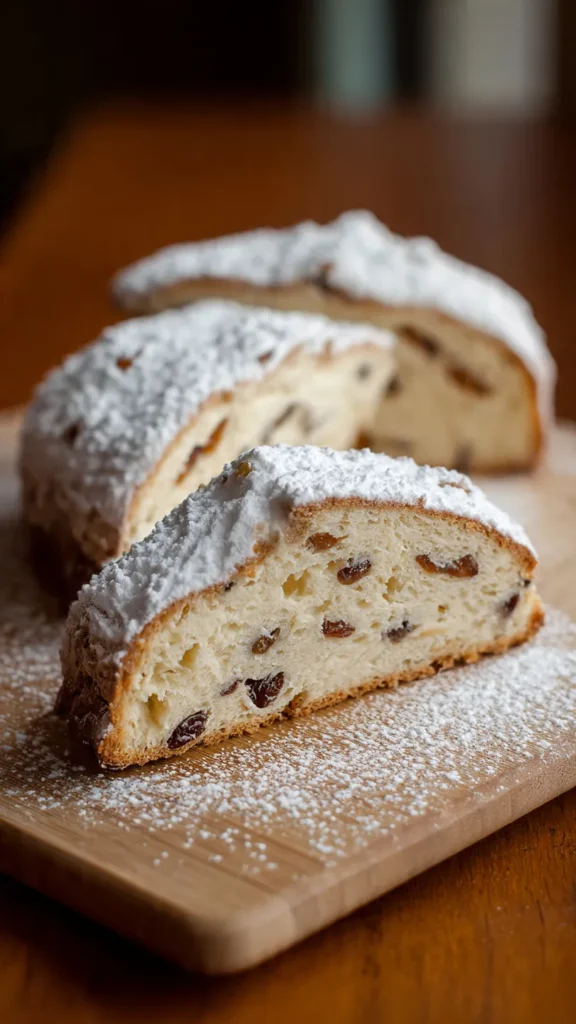
While loaves are still warm, use a wooden skewer or toothpick to poke holes all over the surface—this allows melted butter to penetrate deep into the bread. Generously brush entire surface of each loaf with melted butter, using all of it. Immediately dust loaves heavily with powdered sugar, using a fine-mesh sieve to coat every surface including creases and sides. Rub sugar gently into all the crevices. Let cool completely on a wire rack (1-2 hours). Once fully cooled, apply a second generous coating of powdered sugar for that iconic snow-white appearance. The loaves can be sliced and enjoyed immediately, or wrapped for aging.
Professional Guidance Section
Temperature Control: Yeast activates best between 105-110°F—too cool and it won’t activate, too hot (above 120°F) and you’ll kill it. Test milk with an instant-read thermometer for accuracy. Room temperature butter and eggs blend smoothly without creating lumpy dough.
Fruit Drainage Discipline: Thoroughly drain soaked fruit before adding to dough—excess rum creates overly wet, sticky dough that requires excessive flour, resulting in dense texture. Reserve drained rum for brushing loaves if desired, or save for another use.
Aging Wisdom Secret: The traditional “ripening” period of 1-2 weeks dramatically improves Stollen. Wrap cooled, sugar-coated loaves tightly in plastic wrap, then aluminum foil. Store in a cool, dark place (not refrigerator). During aging, moisture from fruit redistributes throughout the bread, flavors meld, and texture becomes more tender and unified.
Avoid This Error: Don’t skip the butter-and-sugar coating ritual—it’s not just decoration. The butter keeps bread moist during storage and adds richness, while powdered sugar creates a protective barrier that preserves freshness. Without this coating, Stollen dries out within days.
Testing Insight: During recipe development, professional bakers discovered that homemade candied citrus peel versus commercial makes the single biggest flavor improvement—fresh citrus oils and natural sweetness transform the entire bread.
Adaptation & Variation Guide
Dietary Adjustments
Alcohol-Free Version: Replace rum with equal amount fresh orange juice or apple juice for soaking fruit. Add 1 teaspoon rum extract to dough for similar flavor profile. All other components remain identical. Aging time stays the same.
Gluten-Free Conversion: Substitute 1:1 gluten-free flour blend (like Bob’s Red Mill or King Arthur Measure for Measure) for all-purpose flour. Add 1 teaspoon xanthan gum if blend doesn’t include it. Expect slightly denser texture but similar flavor. Kneading time may differ.
Vegan Adaptation: This recipe is inherently dairy- and egg-heavy, making vegan conversion challenging. Replace butter with vegan butter, eggs with flax eggs (3 tablespoons ground flaxseed + 9 tablespoons water), and milk with plant-based milk. Texture and rise will differ significantly but flavor remains pleasant.
Flavor Transformations
Dresden-Style Extra Fruit: Increase raisins to 12 oz and add 2 oz dried apricots and 2 oz dried cranberries for more luxurious fruit-to-dough ratio traditional in Dresden.
Chocolate Chip Variation: Fold in 4 oz dark chocolate chips along with fruit mixture for modern twist that appeals to chocolate lovers while maintaining traditional spice profile.
Mini Stollen Bites: Divide dough into 12 portions, fill each with small piece of marzipan, shape into individual rolls, and bake 15-20 minutes for gift-friendly individual servings.
Presentation Approaches
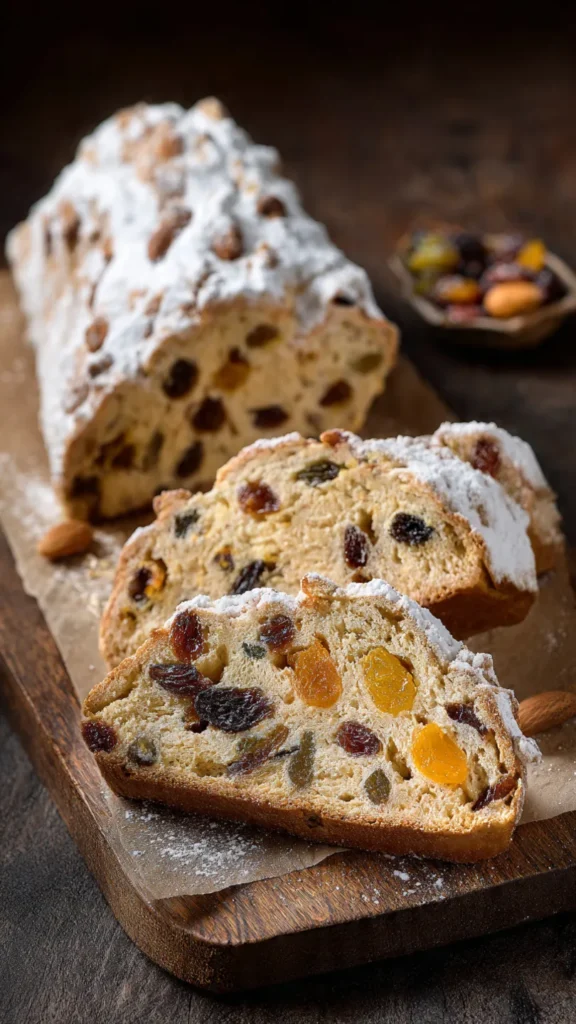
Classic Method: Slice Stollen into ½-inch thick slices, arrange on platter, serve with coffee or tea for traditional German Kaffeeklatsch presentation.
Gift-Wrapped Style: After aging, wrap loaves in cellophane or decorative tissue paper, tie with festive ribbon, attach recipe card for impressive homemade holiday gift that shows extraordinary effort and care.
Toasted Indulgence: Slice aged Stollen, butter lightly, and toast in skillet or under broiler until golden and crispy edges form—transforms texture while intensifying flavors beautifully.
Preservation & Advance Prep
Prepare-Ahead Strategy:
- Soak fruit overnight for deepest flavor and softest texture
- Bake loaves 2-3 weeks before serving and age wrapped for optimal flavor development
- Freeze unbaked shaped loaves; thaw overnight in refrigerator, let come to room temperature, then complete second rise and bake
Storage Guidelines:
Room Temperature: Properly wrapped Stollen stores at cool room temperature (60-65°F) up to 2 weeks, improving with age. Avoid warm locations which accelerate staleness. The sugar coating and butter preserve moisture remarkably well.
Refrigerated: Not recommended for unwrapped Stollen—refrigeration dries bread and dulls flavors. If you must refrigerate due to hot climate, wrap extremely well and bring to room temperature before serving.
Frozen: Freeze whole loaves or pre-sliced portions wrapped tightly in plastic wrap then aluminum foil up to 2 months. Thaw overnight at room temperature, still wrapped. Dust with fresh powdered sugar before serving for refreshed appearance.
Optimal Reheating:
Not typically reheated, but if desired: wrap slices in foil and warm in 300°F oven for 10 minutes until just warmed through. Toast individual slices in dry skillet 2-3 minutes per side for crispy-edged variation.
Complementary Serving Suggestions
Ideal Pairings:
- Strong black coffee or espresso — Traditional German accompaniment that cuts sweetness with bitter complexity and enhances spice notes
- Hot spiced wine (Glühwein) — Classic Christmas market pairing that echoes warming spices and creates authentic holiday atmosphere
- Cultured butter — European-style butter with tangy richness enhances toasted Stollen slices for decadent breakfast or afternoon treat
Menu Building:
- German Christmas Breakfast: Serve Stollen alongside soft-boiled eggs, assorted cheeses, sliced cold meats, fresh fruit, and assorted jams for traditional German Frühstück
- Holiday Coffee Hour: Pair with Christmas cookies (Lebkuchen, Springerle), hot chocolate, coffee, and tea for elegant afternoon gathering
- Christmas Morning Tradition: Feature Stollen as centerpiece of breakfast table with scrambled eggs, bacon, fresh fruit salad, and champagne or orange juice
Nutritional Information (Single Serving)
Calories: 285 | Protein: 5g | Carbohydrates: 42g | Fat: 11g | Fiber: 2g | Sugar: 24g | Sodium: 125mg
Disclaimer: Calculated via USDA FoodData Central nutritional database based on 24 servings (2 loaves, each cut into 12 slices). Values approximate depending on specific ingredient brands and slice thickness. Complete nutrition methodology available upon request.
Reader FAQ Module
Q: Can I make this without a stand mixer?
A: Yes, but it requires significant effort. Mix ingredients in large bowl with wooden spoon until combined, then knead by hand on floured surface for 15-20 minutes until smooth and elastic. Your arms will get an excellent workout, but results are equally delicious.
Q: My dough is too sticky—what should I do?
A: Sticky dough usually results from excess moisture in soaked fruit or humid conditions. Add additional flour 2 tablespoons at a time while kneading until dough becomes tacky but not wet. Don’t add too much or bread becomes dense—dough should still feel slightly soft.
Q: Do I really need to age Stollen for 2 weeks?
A: You can eat it immediately after cooling, and it will taste wonderful. However, aging truly transforms Stollen—flavors meld, fruit juices migrate through bread, and texture becomes more unified. Professional German bakers insist aging is when Stollen reaches its peak. Patience is rewarded.
Q: Can I omit the marzipan?
A: Yes, though purists consider marzipan essential to authentic Stollen. Without it, you have excellent fruit bread but not traditional Stollen. If you dislike almond flavor, simply omit and increase fruit slightly for similar texture interest.
Q: Why is my Stollen dense instead of light?
A: Common causes: over-kneading after adding fruit (deflates dough), insufficient rising time (enriched dough rises slowly), too much flour added (creates heavy texture), or yeast that wasn’t active. Ensure adequate rise times and avoid adding excessive flour.
Q: What’s the best way to slice Stollen without crumbling?
A: Use a sharp serrated knife and saw gently with back-and-forth motion rather than pressing down. Aged Stollen slices more cleanly than fresh. For cleanest cuts, let loaf come to room temperature and wipe knife between slices.
Background & Heritage Context
Stollen’s history stretches back to 1329 Dresden, Germany, where the first documented mention appears in a town council receipt. Initially, Stollen was a simple bread made only with flour, oats, and water—a humble Lenten bread baked during Advent fasting when butter, milk, and eggs were forbidden by Catholic doctrine. The dense, flavorless loaves bore no resemblance to today’s rich, fruit-studded version.
The transformation began in 1450 when Saxon princes petitioned Pope Nicholas V to lift the butter ban, arguing that oil alternatives were expensive and unpalatable in Northern climates. After decades of diplomatic wrangling, Pope Innocent VIII issued the “Butter Letter” in 1490, allowing Saxon nobility to use butter during fasting periods. This permission gradually extended to common people, revolutionizing Stollen from austere fast-bread to the rich, festive treat we know today.
By the 1500s, Dresden bakers had established Stollen as the region’s signature Christmas specialty, adding expensive imported spices, dried fruits, and marzipan that signified luxury and celebration. The bread’s distinctive folded shape symbolizes the Christ child wrapped in swaddling clothes, giving Stollen religious significance beyond mere sustenance. Dresden’s legendary “Stollenfest” (Stollen Festival) dates to 1560, when Saxon Elector August the Strong commissioned a massive 1.8-ton Stollen requiring 3,600 eggs and 100 kilograms of yeast.
The tradition of aging Stollen emerged from practical necessity—before modern refrigeration, the high butter and sugar content preserved bread for weeks, improving flavor as households consumed loaves slowly throughout Advent. German immigrants brought Stollen traditions to America, where it gained popularity in Midwest communities with strong German heritage. Today, authentic Dresden Stollen carries protected geographical indication status in the European Union, though home bakers worldwide recreate this beloved bread that transforms kitchens into Christmas celebrations through aroma alone.
Print-Optimized Recipe Summary
Homemade Stollen – Classic German Christmas Bread
Rich fruit bread with marzipan center, ages beautifully for 2 weeks
Ingredients: 4-4½ cups flour – 1 cup lukewarm milk – 3 tsp yeast – ½ cup sugar – 1 egg + 2 yolks – ¾ cup softened butter – 2 tsp vanilla – Lemon zest – 1 tsp salt – ¾ tsp cardamom – ¾ tsp mace – ½ tsp cinnamon – 9 oz raisins – 3 oz candied lemon peel – 3 oz candied orange peel – 3 oz chopped almonds – ⅓ cup rum – 8 oz marzipan – ½ cup melted butter for coating – 4 cups powdered sugar
Method:
- Soak raisins, candied peel, almonds in rum 2-4 hours (or overnight); drain before using
- Mix lukewarm milk, yeast, 2 tbsp sugar; let proof 10 minutes until frothy
- Add remaining sugar, flour, eggs, butter, vanilla, zest, salt, spices; knead 7-10 minutes until smooth
- Mix in drained fruit-nut mixture; place in oiled bowl, cover, rise 60-90 minutes until doubled
- Divide dough in half; roll each into 10-inch oval, 1-inch thick
- Place marzipan log down center, fold dough over asymmetrically, seal ends, create characteristic hump
- Place on baking sheets, cover, rise 40-60 minutes until puffy
- Bake at 350°F for 30-40 minutes until golden (190°F internal temp)
- Poke holes with skewer, brush generously with melted butter, coat heavily with powdered sugar
- Cool completely, apply second sugar coating; wrap tightly and age 1-2 weeks for best flavor
Essential Notes: All ingredients room temperature – Drain soaked fruit thoroughly – Don’t skip butter-sugar coating – Ages beautifully 2 weeks wrapped at room temp – Freezes up to 2 months – Makes 2 loaves – Flavor improves with aging