Ultimate Cheese Sauce for Fries (Liquid Gold in 5 Minutes!)
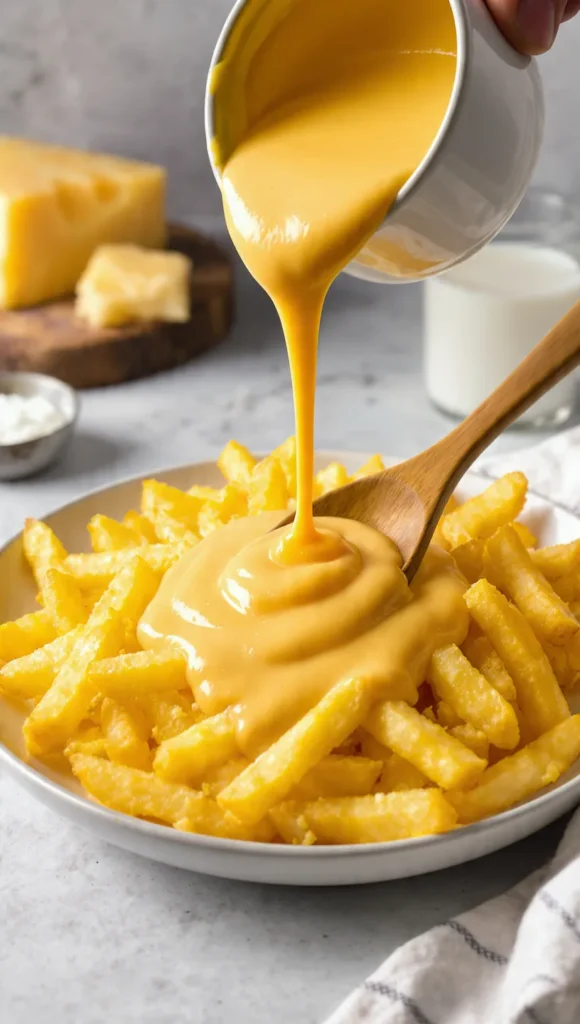
Imagine dipping a hot, crispy french fry into a velvety, molten pool of cheese sauce so rich and flavorful that it transforms every bite into pure comfort food bliss. This isn’t watery nacho cheese from a jar or grainy, separated sauce—this is the Ultimate Cheese Sauce, a restaurant-quality creation that combines sharp cheddar with the secret ingredient (American cheese) that ensures impossibly smooth texture and stays creamy even as it cools.
I perfected this recipe after years of disappointing cheese sauces that either broke into greasy puddles or turned into solid blocks the moment they cooled. What makes this sauce truly ultimate is the simple roux-based technique that any beginner can master in 5 minutes, plus the addition of American cheese which contains emulsifiers that prevent the cheddar from separating. The result is a glossy, silky sauce that clings perfectly to fries, stays smooth at any temperature, and tastes like you melted premium cheese—not processed powder.
Whether you’re elevating frozen fries for game day, creating loaded fries for a party, or simply treating yourself to the ultimate comfort food snack, expect professional-quality results that’ll make you wonder why you ever settled for anything less.
Table of Contents
Recipe Quick Reference Module
Time Breakdown: Prep: 2 min | Active: 5 min | Total: 7 min
Output: About 1½ cups (serves 4-6) | Skill Level: Beginner
At-a-Glance Details:
- Origin cuisine: American Comfort Food
- Meal category: Sauce / Condiment / Snack
- Dietary tags: Vegetarian, Gluten-free option available
- Ideal occasion: Game day, movie nights, appetizers, loaded fries, nachos
Value Proposition Points
- 5-Minute Magic — From start to finish in just 5 minutes with only 6 simple ingredients
- No-Separation Guarantee — Stays smooth and creamy without breaking or becoming grainy thanks to American cheese trick
- Universal Application — Perfect for fries, nachos, soft pretzels, vegetables, burgers, and any food needing cheese sauce
- Better Than Restaurant — Richer, cheesier flavor than commercial cheese sauces at a fraction of the cost
- Foolproof Formula — Works perfectly every time with simple whisking technique that beginners can master immediately
Featured Ingredient Analysis
Sharp Cheddar Cheese (Freshly Grated)
The flavor foundation that delivers bold, tangy cheese taste everyone craves. Sharp cheddar provides the authentic cheese flavor and beautiful orange color that defines great cheese sauce. Extra-sharp or aged cheddar creates even more intense flavor for those who want maximum cheese punch. Freshly grated cheese from a block is absolutely critical—pre-shredded cheese contains anti-caking agents (cellulose) that prevent smooth melting and create grainy, separated sauce. The cheddar’s high fat content also contributes to rich, creamy mouthfeel and satisfying comfort food quality.
American Cheese Slices (The Secret Weapon)
The surprising ingredient that transforms good cheese sauce into ultimate cheese sauce. American cheese contains sodium citrate and other emulsifiers that help fats and water stay combined, preventing the dreaded separation and graininess that ruins homemade cheese sauces. Just 2 slices add imperceptible flavor but create professional-level smooth, glossy texture that stays stable at any temperature. This is why restaurant cheese sauces stay creamy while homemade attempts often fail—they use emulsifiers. American cheese provides those emulsifiers naturally while adding complementary mild flavor that lets the sharp cheddar shine.
Whole Milk (Full-Fat Required)
The liquid base that creates the proper consistency and richness. Whole milk’s fat content is essential for creating velvety texture—low-fat or skim milk produces thin, watery sauce that lacks body and richness. The milk proteins also help stabilize the emulsion between cheese fats and water, working alongside the roux and American cheese to create perfectly smooth texture. Cold milk added gradually to the roux prevents lumps from forming, while continued heating thickens the sauce to ideal coating consistency that clings to fries without running off.
Component-Based Ingredient Lists
Primary Component [Cheese Sauce Base]:
- 1 tablespoon salted butter (or unsalted butter plus pinch of salt)
- 1 tablespoon all-purpose flour
- ¼ teaspoon fine sea salt (omit if using salted butter)
- 1 cup whole milk (cold)
- 4 oz sharp cheddar cheese, freshly grated (about 1 cup)
- 2 slices American cheese (standard sandwich size)
Optional Flavor Enhancements:
- ¼ teaspoon garlic powder (adds savory depth)
- ¼ teaspoon paprika or smoked paprika (color and subtle smokiness)
- Pinch of cayenne pepper (gentle heat)
- ½ teaspoon Dijon mustard (tangy complexity)
- Dash of hot sauce (spicy kick)
Serving Suggestions:
- Crispy french fries (any style)
- Soft pretzels
- Steamed broccoli or cauliflower
- Nachos or tortilla chips
- Burger or sandwich topping
Ingredient Intelligence:
- Premium quality crucial for: Sharp cheddar cheese (defines entire flavor profile), butter (adds richness), whole milk (creates proper consistency)
- Temperature requirements: Milk should be cold when added to roux; cheese should be room temperature for easier melting
- Non-negotiable elements: Freshly grated cheddar cheese (not pre-shredded); whole milk (not low-fat); American cheese slices for emulsification
Tool & Equipment Section
Required Items:
- Small saucepan (2-3 quart capacity)
- Whisk (essential for smooth sauce)
- Box grater (for freshly grating cheese)
- Measuring cups and spoons
- Rubber spatula or wooden spoon
Bonus Tools:
- Instant-read thermometer — Monitors sauce temperature to prevent scorching
- Fine-mesh strainer — Removes any lumps if needed for perfectly smooth sauce
- Small serving bowl or ramekin — For individual dipping portions
Preparation Method (Detailed Steps)
Step 1: Create the Roux Foundation
Melt butter in a small saucepan over medium heat, swirling the pan until butter is completely melted and begins to foam slightly. Add flour and salt (if using) all at once. Immediately begin whisking vigorously to combine butter and flour into a smooth paste. Continue whisking constantly for 30-60 seconds until the mixture becomes bubbly and just begins to turn a light golden color—this cooks out the raw flour taste. Pro tip: Don’t rush this step; cooking the roux properly prevents “floury” tasting sauce and creates better thickening power.
Step 2: Add Milk Gradually for Smooth Texture
Slowly pour in the cold milk while whisking constantly and vigorously. Add milk in a steady stream rather than all at once—this prevents lumps from forming. Whisk continuously as the mixture transforms from thick paste to thin liquid. Continue cooking over medium heat, whisking occasionally, for 2-3 minutes until the sauce begins to thicken noticeably and can coat the back of a spoon. You’ll feel resistance when whisking—that’s your signal the base is ready. Success marker: When you draw your finger across the back of the spoon dipped in sauce, it should leave a clear line that doesn’t immediately fill back in.
Step 3: Melt Cheese Off Heat
Remove the saucepan completely from heat—this crucial step prevents cheese from breaking and becoming grainy. Add the grated cheddar cheese by the handful, stirring with a wooden spoon or whisking gently after each addition until fully melted and incorporated before adding more. Add the 2 slices of American cheese and stir until completely melted and the sauce becomes silky smooth and glossy. The sauce should be thick enough to coat a spoon heavily but still pourable. Texture checkpoint: Sauce should flow smoothly and have a beautiful sheen—this indicates proper emulsification.
Step 4: Season and Adjust Consistency
Taste the sauce and add optional seasonings if desired—garlic powder, paprika, cayenne, mustard, or hot sauce. Stir well to incorporate. If the sauce is too thick, whisk in additional milk 1 tablespoon at a time until you reach desired consistency. If it’s too thin, return to low heat and simmer for 1-2 minutes while whisking to thicken further, then remove from heat. Timing alert: Serve immediately while warm for best flavor and texture. The sauce will thicken slightly as it cools.
Step 5: Serve Immediately Over Hot Fries
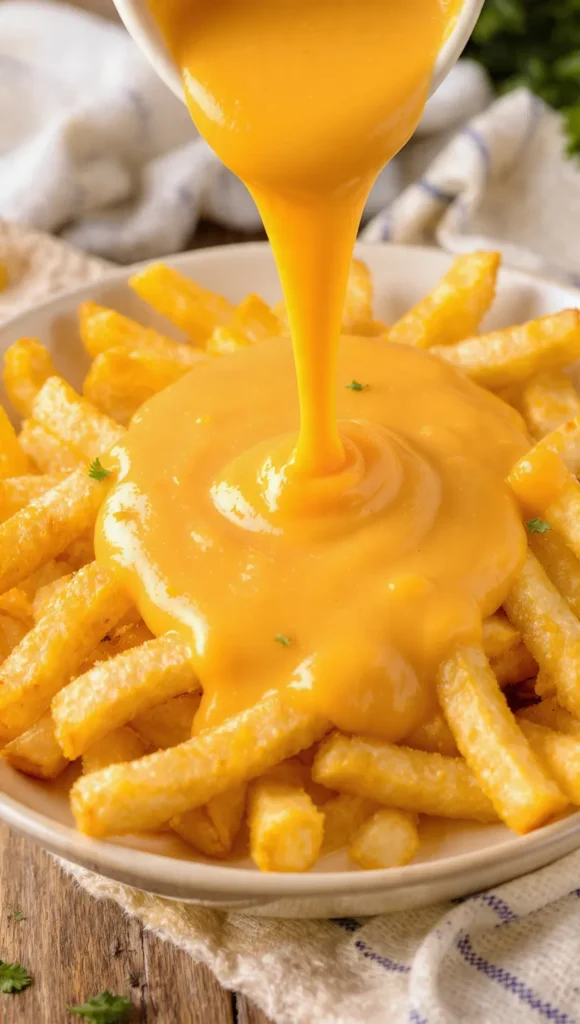
Pour the hot cheese sauce over crispy french fries on a serving platter or individual plates, or transfer sauce to a serving bowl for dipping. The sauce is best served immediately while hot and freshly made—this is when texture is at its silkiest. If needed, keep sauce warm over the lowest possible heat setting, stirring occasionally, for up to 30 minutes. Add splashes of milk if it becomes too thick during warming.
Professional Guidance Section
Temperature Control: Medium heat is critical for the roux and milk thickening stages, but always remove from heat completely before adding cheese. High heat causes cheese proteins to seize and separate, creating grainy texture and greasy appearance instead of smooth creaminess.
Cheese Grating Discipline: Freshly grating cheese from a block is non-negotiable—pre-shredded cheese will never melt smoothly due to anti-caking coatings. Take the extra 2 minutes to grate your own cheese; the texture difference is dramatic and immediately noticeable.
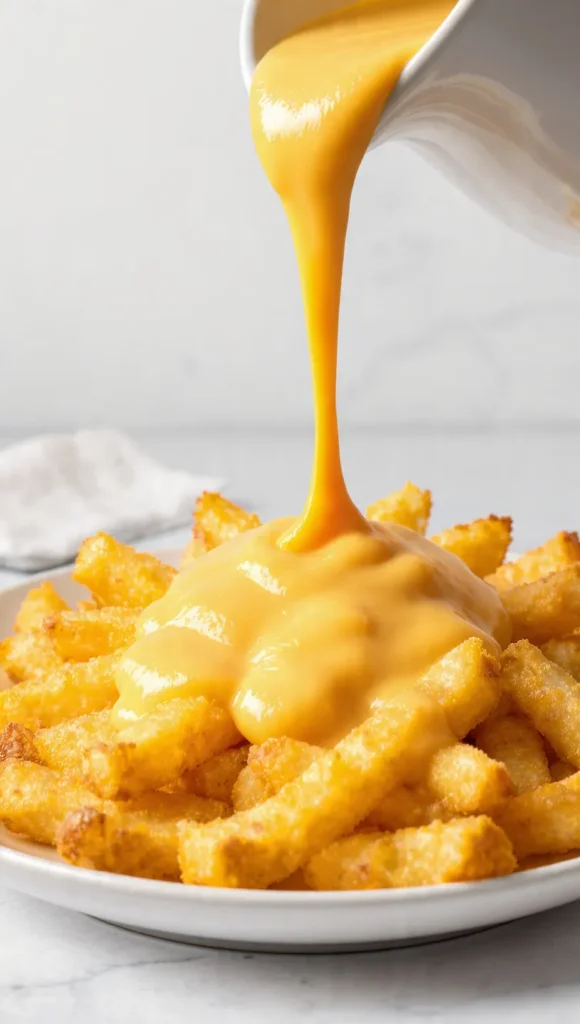
Whisking Consistency Secret: Constant whisking when making the roux and adding milk prevents lumps from forming. Once cheese is added, gentle stirring is sufficient—aggressive whisking at this stage can break the emulsion and make sauce greasy.
Avoid This Error: Never let the sauce boil after adding cheese—high heat causes the proteins and fats to separate permanently, creating an oily puddle with rubbery cheese bits floating on top. If this happens, the sauce cannot be saved and must be started over.
Testing Insight: During recipe development, chefs discovered that adding American cheese—even just 2 slices—prevents the cheddar from breaking and creates texture so smooth it rivals commercial cheese sauce products.
Adaptation & Variation Guide
Dietary Adjustments
Gluten-Free Version: Replace all-purpose flour with cornstarch (use 1½ teaspoons cornstarch whisked into cold milk before adding to butter) or gluten-free all-purpose flour. Results are nearly identical to traditional version.
Lactose-Free Option: Use lactose-free milk and lactose-free cheddar cheese (widely available at most grocers). Texture and flavor remain excellent while being digestible for lactose-intolerant individuals.
Lower-Fat Alternative: Use 2% milk instead of whole milk and reduce butter to 2 teaspoons. Expect slightly thinner consistency and less rich flavor, but sauce still works well. Do not use fat-free products—texture suffers significantly.
Flavor Transformations
Spicy Jalapeño Cheese Sauce: Add 2 tablespoons finely diced pickled jalapeños and ¼ teaspoon cayenne pepper. Use pepper jack cheese for half the cheddar for extra heat.
Bacon Cheese Sauce: Stir in 3-4 strips of crispy, crumbled bacon and ½ teaspoon smoked paprika for smoky, savory depth. Perfect for loaded fries.
Beer Cheese Sauce: Replace ¼ cup of the milk with your favorite beer (lager or ale). The beer adds malty complexity and slight bitterness that balances richness.
Presentation Approaches
Classic Method: Pour generously over hot fries on a platter, allowing sauce to pool at the bottom for dipping. Garnish with chopped parsley or chives.
Individual Servings: Serve fries in paper-lined baskets or bowls with small ramekin of cheese sauce alongside for dunking and controlling cheese-to-fry ratio.
Loaded Fries Style: Layer fries with cheese sauce, then add toppings like bacon bits, jalapeños, diced onions, sour cream, and green onions for ultimate indulgence.
Preservation & Advance Prep
Prepare-Ahead Strategy:
- Make sauce up to 2 hours ahead; keep warm in slow cooker on “warm” setting, stirring occasionally
- Grate cheese up to 3 days ahead; store in airtight container refrigerated
- Not recommended to make more than 2 hours in advance—sauce quality deteriorates with extended warming
Storage Guidelines:
Room Temperature: Do not leave at room temperature longer than 2 hours due to dairy content and food safety concerns.
Refrigerated: Store in airtight container up to 4 days refrigerated. Sauce will solidify when cold and appear separated—this is normal. Reheat gently over low heat, whisking constantly and adding 2-3 tablespoons milk to restore creamy consistency.
Frozen: Cheese sauces generally don’t freeze well—texture becomes grainy and separated upon thawing. If necessary, freeze up to 1 month; thaw in refrigerator and reheat very gently with added milk, whisking vigorously.
Optimal Reheating:
Transfer refrigerated sauce to small saucepan, add 2-3 tablespoons milk, and heat over lowest possible heat setting while whisking constantly until smooth and heated through (3-5 minutes). Microwave works in a pinch: heat in 20-second intervals, stirring between each, until warm and smooth.
Complementary Serving Suggestions
Ideal Pairings:
- Crispy french fries (any cut style) — The obvious and perfect pairing that started it all
- Soft pretzels — Classic pub-style combination where salty dough meets creamy cheese
- Steamed vegetables — Broccoli, cauliflower, and carrots become kid-friendly when served with cheese sauce
Menu Building:
- Game Day Spread: Serve Ultimate Cheese Sauce with multiple applications—fries, nachos, soft pretzels, and veggie sticks for complete snack table
- Loaded Fries Bar: Set up toppings station with cheese sauce as base, then bacon, jalapeños, sour cream, green onions, and ground beef for DIY loaded fries
- Burger Night Enhancement: Use as topping for burgers, dip for onion rings, or sauce for burger bites alongside regular condiments
Nutritional Information (Single Serving)
Calories: 145 | Protein: 7g | Carbohydrates: 5g | Fat: 11g | Fiber: 0g | Sugar: 2g | Sodium: 320mg
Disclaimer: Calculated via USDA FoodData Central nutritional database based on 6 servings (¼ cup each). Values approximate depending on specific cheese brands used. Does not include fries or other foods served with sauce. Complete nutrition methodology available upon request.
Reader FAQ Module
Q: Can I make this without American cheese?
A: Yes, but texture won’t be as smooth. For similar results without American cheese, add ⅛ teaspoon sodium citrate (available online) to the milk before heating, or accept that sauce may become slightly grainy as it cools.
Q: My sauce is grainy and separated—what went wrong?
A: Most common causes: used pre-shredded cheese with anti-caking agents, added cheese while sauce was too hot, or let sauce boil after adding cheese. Prevention is key—always use freshly grated cheese and remove from heat before adding cheese.
Q: How do I keep sauce from getting too thick?
A: Whisk in additional milk 1 tablespoon at a time until desired consistency returns. If keeping warm for extended time, stir occasionally and add milk as needed to maintain pourable texture.
Q: Can I use different types of cheese?
A: Absolutely! Try Gruyère for sophisticated flavor, pepper jack for spice, or mix multiple cheeses like cheddar-mozzarella blend. Always keep the 2 American cheese slices for emulsification regardless of other cheese choices.
Q: Why do I need to make a roux instead of just melting cheese in milk?
A: The roux (butter-flour mixture) acts as a thickener and stabilizer that prevents cheese and milk from separating. Without it, you’ll have thin, greasy liquid with cheese floating on top rather than smooth, creamy sauce.
Q: How long can I keep sauce warm before serving?
A: Up to 30 minutes over lowest heat setting or in slow cooker on warm, stirring occasionally. Beyond 30 minutes, texture begins deteriorating and sauce may separate. Best enjoyed fresh and immediately.
Background & Heritage Context
Cheese sauce for fries represents American comfort food innovation—taking European béchamel sauce traditions and adapting them for casual, snackable applications. The classic French béchamel (white sauce made from roux and milk) dates to the 1600s, credited to chef Louis de Béchameil. By adding cheese to béchamel, French cooks created Mornay sauce, traditionally served with elegant dishes like poached eggs and fish.
American adaptations transformed this refined sauce into something more casual and accessible. The addition of sharp cheddar—an English cheese that became wildly popular in America—created the bold, tangy flavor profile Americans prefer. The genius innovation came with incorporating American cheese, which was invented in 1916 by James L. Kraft. American cheese’s emulsifying salts (sodium citrate and sodium phosphate) revolutionized cheese sauce by preventing separation and graininess that plagued home cooks.
By the mid-20th century, cheese sauce had become synonymous with American snack culture—particularly at movie theaters, sports stadiums, and fast-food restaurants where it appeared alongside nachos, pretzels, and increasingly, french fries. The “cheese fries” phenomenon exploded in the 1980s-1990s as restaurants discovered that adding cheese sauce transformed humble fries into premium menu items worth higher prices.
Today’s ultimate cheese sauce represents the perfection of this American classic—combining French technique (roux), English cheese (cheddar), and American innovation (processed cheese emulsifiers) into five minutes of pure comfort food magic that elevates any snack into something special.
Print-Optimized Recipe Summary
Ultimate Cheese Sauce for Fries
Smooth, creamy, restaurant-quality sauce in 5 minutes
Ingredients: 1 tbsp butter – 1 tbsp flour – ¼ tsp salt – 1 cup whole milk (cold) – 4 oz sharp cheddar cheese (freshly grated, about 1 cup) – 2 slices American cheese
Method:
- Melt butter in small saucepan over medium heat
- Add flour and salt; whisk constantly 30-60 seconds until bubbly and light golden
- Slowly pour in cold milk while whisking constantly until smooth
- Continue cooking and whisking 2-3 minutes until thickened enough to coat back of spoon
- Remove from heat completely; add cheddar cheese by handfuls, stirring until melted
- Add American cheese slices; stir until completely smooth and glossy
- Serve immediately over hot fries or keep warm over lowest heat, stirring occasionally
Essential Notes: Must use freshly grated cheddar (not pre-shredded) – Remove from heat before adding cheese – Whole milk required for proper consistency – American cheese is the secret for smooth texture – Add optional seasonings: garlic powder, paprika, cayenne – Thin with milk if too thick – Serve immediately for best texture – Reheats well with added milk – Makes about 1½ cups